
 中文简体
中文简体

Product Consultation
Your email address will not be published. Required fields are marked *
Content
The best plastic gloves for cooking are thin, food-grade polyethylene (PE) or TPE gloves with a reinforced thumb crotch area, since this narrow seam between the thumb and index finger is the single most common failure point during kneading, gripping, and repetitive hand motion in a kitchen. A well-made pair should feel loose enough to slip on in under two seconds, thick enough to resist puncture from bone fragments or citrus peel, and cheap enough that a cook never hesitates to change gloves between raw meat and vegetables.
For most home and commercial kitchens, a 2.5 to 4 mil polyethylene glove with a widened, double-sealed thumb crotch covers the majority of prep tasks. Heavier tasks such as deboning, marinating with acidic liquids, or working with hot surfaces call for a thicker TPE or vinyl option instead. Kitchens that go through hundreds of gloves a week should weigh cost per glove against tear rate, since a slightly more expensive box with a stronger thumb crotch often works out cheaper overall once wasted, torn gloves are factored in.
The remainder of this guide walks through materials, sizing, thumb crotch construction, task-by-task recommendations, buying strategy for different kitchen types, storage, sustainability, troubleshooting, and a full glossary of terms used on glove packaging, so that a cook or purchasing manager can make a confident decision without guesswork.
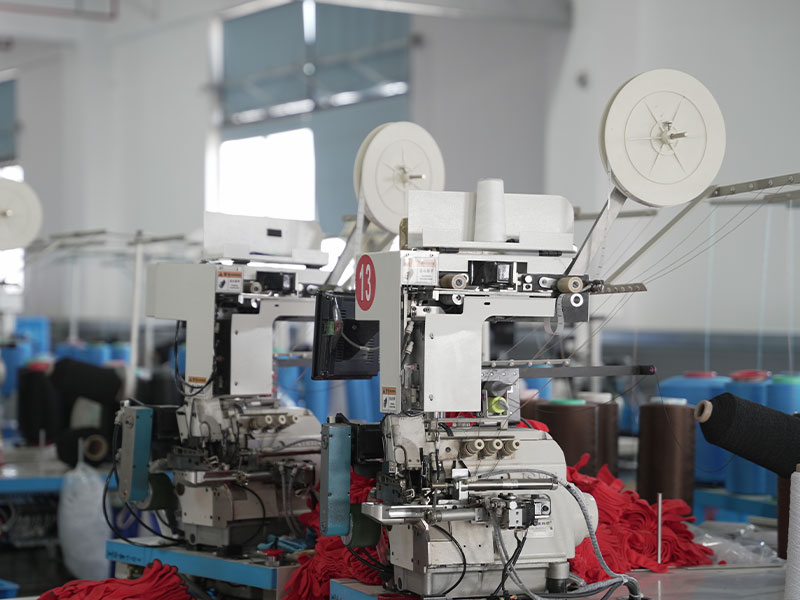
Plastic gloves for cooking are single-use or short-cycle-use hand coverings made from thin polymer films rather than latex or woven fabric. They sit between bare-hand food handling and heavy-duty rubber gloves, giving a cook a barrier against grease, juices, and cross-contamination without sacrificing the finger sensitivity needed to season, plate, or shape food by feel.
Unlike household cleaning gloves, which are built for repeated washing and drying cycles, cooking gloves are designed around a short working life: put on, complete one task or one segment of raw food handling, remove, and discard. This single-use philosophy is what keeps the material thin enough to preserve dexterity while still forming a reliable barrier.
A fourth category, nitrile, appears occasionally in kitchens that also handle cleaning chemicals, since nitrile resists oils and solvents better than any of the three film types above, though it costs more per glove and is usually reserved for tasks outside direct food contact.
Each film type behaves differently at the thumb crotch, which is the point where the glove pattern curves sharply and the material is under the most tension during a closing grip. Understanding that geometry is the key to picking a glove that survives an actual shift rather than one that looks fine folded flat in a box.
Every disposable glove is cut from a flat sheet and sealed along two edges. The thumb crotch is the curved junction where the thumb panel meets the palm panel, and it carries more stress than any other seam on the glove. When a cook grips a knife handle, twists open a jar, or kneads dough, the fabric at that junction stretches in two directions at once. On a poorly sealed glove, this is exactly where a pinhole tear starts, often invisibly at first, spreading only after several more grips.
Better gloves address the thumb crotch in three ways: a wider cut that reduces the sharpness of the curve, a double-pass heat seal that thickens the film along the seam, and a slightly higher gauge (thickness) concentrated in that zone rather than spread evenly across the glove. Gloves that skip all three tend to fail within the first few uses, particularly for cooks with larger hands who stretch the fabric further on every grip.
Most retail boxes advertise overall thickness in mil and little else, which means the thumb crotch reinforcement is invisible until the gloves are actually worn. Cooks who buy based on box thickness alone are sometimes surprised when a "thicker" glove tears faster than a thinner one from a different batch, simply because the crotch cut and seal quality differ between manufacturers even at the same nominal gauge.
Before committing to a bulk case, pull one glove on and make a tight fist, then release and spread the fingers as wide as they go. Repeat five times. A glove with a durable thumb crotch will show no whitening or stress lines at the junction; a weak one often shows a faint stretch mark after only two or three repetitions, which is an early warning sign of an eventual tear. Running this same test across a few gloves from different boxes before a bulk purchase is a fast way to compare suppliers without waiting for a bad batch to fail mid-shift.
The table below summarizes how the three common materials perform against the tasks that matter most in a working kitchen, based on typical characteristics reported across foodservice supply catalogs and kitchen equipment reviews.
| Material | Typical Thickness | Grip When Wet | Best Suited For |
|---|---|---|---|
| Polyethylene (PE) | 1.5 to 2.5 mil | Low | Quick prep, dry ingredients, sandwich lines |
| TPE | 3 to 5 mil | Medium to High | Extended prep sessions, meat handling, dishwashing spot tasks |
| Vinyl (PVC) | 4 to 6 mil | Medium | Marinating, brining, acidic or oily ingredients |
| Nitrile | 3 to 8 mil | High | Cleaning chemicals, sanitizing, oil-heavy tasks |
Thickness alone does not guarantee durability. A 5 mil vinyl glove with a narrow, single-sealed thumb crotch can still tear before a 2.5 mil PE glove that was cut with a wider curve and a double seal at that same junction. Thickness and thumb crotch geometry should be evaluated together, not separately.
Some PE and TPE gloves add a light texture at the fingertips, either a matte finish or fine raised dots, to improve grip when handling wet or oily ingredients. Smooth-finish gloves are cheaper to produce but slip more easily once moisture builds up, which indirectly increases thumb crotch stress because the hand compensates by gripping harder.
Clear gloves are standard, but colored gloves, often blue, are common in kitchens that want to visually spot a torn glove fragment if it ends up in food, since blue rarely occurs naturally in cooking ingredients. Some kitchens also color-code by task: one color for raw protein, another for produce, and a third for ready-to-eat food, reducing the chance of cross-contamination from grabbing the wrong pair mid-shift.
An oversized glove bunches at the fingertips and traps extra material at the thumb crotch, which paradoxically makes tearing more likely because the loose fabric catches on utensils and cutting boards. An undersized glove stretches the crotch seam permanently on the very first wear, thinning the film before any real work begins.
| Size | Palm Circumference | Typical User |
|---|---|---|
| Small | 17 to 19 cm | Smaller hands, detail plating |
| Medium | 19 to 22 cm | Most home cooks |
| Large | 22 to 25 cm | Line cooks, extended prep sessions |
| Extra Large | 25 cm and above | Larger hands, heavy-duty prep work |
Nearly all disposable cooking gloves are cut ambidextrous, meaning the same glove fits either hand. This keeps manufacturing simple and pricing low, but it also means the thumb crotch is a compromise shape rather than one tailored to a left or right hand specifically, which is part of why fit and sizing matter more with these gloves than with a hand-specific work glove.
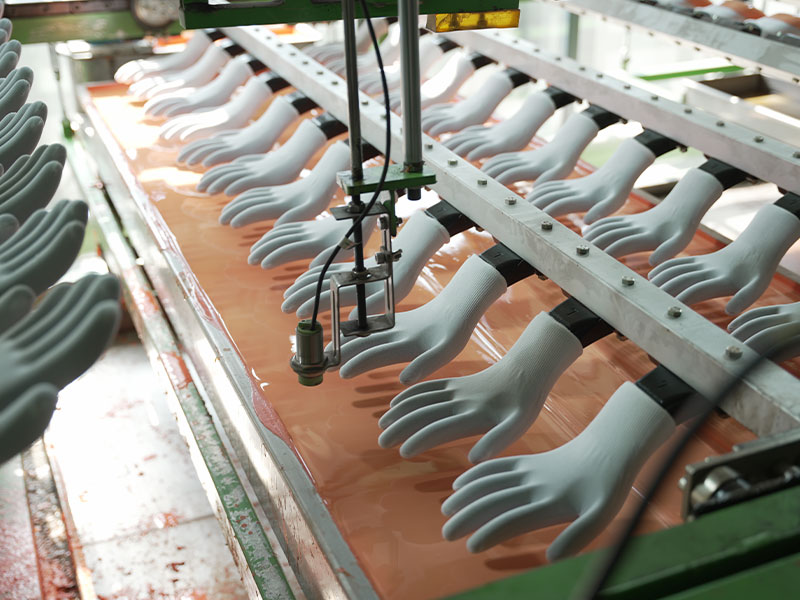
Not every kitchen task deserves the same glove. Choosing based on the task, rather than grabbing whatever is closest to the stove, cuts down on both waste and mid-task tears.
Choose a thicker PE or TPE glove and change it immediately after contact with raw protein. The thumb crotch takes the most strain here because deboning and trimming motions repeatedly flex that joint, and bone fragments increase the risk of puncture at the fingertips as well.
Fish scales and shellfish shells are sharp in ways that raw poultry usually is not, so a slightly thicker glove earns its keep here. TPE tends to outperform PE for this task because its added stretch resists small nicks from scaling and shelling motions better than a stiffer film.
TPE gloves with a stretch-forward cut perform best, since kneading involves sustained, repeated flexing rather than a single grip. A stiff vinyl glove will crack at the thumb crotch faster under this kind of continuous motion, and sticky dough can also pull at loose fingertip material on an oversized glove.
Standard plastic gloves are not heat-resistant and should never substitute for insulated mitts near open flame or hot pans. They are suitable only for brief contact with warm, not hot, surfaces such as recently plated food.
Vinyl holds up best against citrus, vinegar, and oil-based marinades over longer soak times, resisting the softening that PE film can show after extended contact with acidic liquids. For marinades left to sit for more than a few minutes, vinyl is generally the safer choice over thin PE.
Light, low-friction tasks like handling powdered sugar, folding delicate dough, or working with chocolate favor a thin PE glove, since the priority here is fingertip sensitivity rather than puncture resistance.
A snug, well-fitted glove in a smaller size range keeps fine motor control intact for precise plating work, where a loose fingertip can fumble a delicate garnish more easily than bare hands would.
Glove needs differ significantly between a home kitchen, a food truck, a catering operation, and a full-service restaurant, and buying the wrong format for the setting either wastes money or leaves the kitchen short-handed at a busy moment.
A single mid-size box of PE gloves in the 2.5 to 3 mil range covers most home cooking needs, since usage volume is low and tasks vary widely from one meal to the next. Buying a small box of thicker TPE gloves as a backup for occasional heavy tasks, like handling a whole raw chicken, rounds out a practical home setup.
Limited counter space favors compact dispenser boxes that can be mounted within arm's reach, and a single durable glove type, usually a mid-thickness TPE, simplifies inventory in a space where storing multiple glove varieties is impractical.
Catering work often shifts between prep kitchen tasks and on-site service, so a two-tier approach works well: thicker gloves for prep-heavy tasks like trimming and portioning, and lighter, closer-fitting gloves for front-of-house plating and service.
High-volume restaurants benefit most from buying in bulk cases with consistent thumb crotch quality, since even a small defect rate multiplied across thousands of gloves a month becomes a real cost. Standardizing on one or two glove types across stations also reduces confusion during a busy service.
Understanding why gloves fail helps a cook avoid the exact motions that cause it, rather than simply buying a thicker box and hoping for the best.
| Tear Location | Common Cause | Prevention |
|---|---|---|
| Thumb crotch | Repeated gripping and stretching motion | Choose gloves with a widened, reinforced crotch cut |
| Fingertips | Contact with sharp bone fragments or fish scales | Increase glove thickness for boning tasks |
| Wrist opening | Forcing a too-small glove over the hand | Size up and roll the cuff rather than stretch it |
| Palm center | Prolonged contact with hot surfaces softening the film | Avoid using disposable gloves near direct heat |
| Side seam | Manufacturing inconsistency in seal thickness | Spot-check a sample glove from each new case before full use |
A glove rarely fails without warning. Whitening at the thumb crotch, a faint crackling sound when flexed, or a slightly tacky feel where the film has thinned are all signals that a glove is close to tearing. Training staff to recognize and act on these signs before a tear happens, rather than after, prevents contamination moments during active food handling.
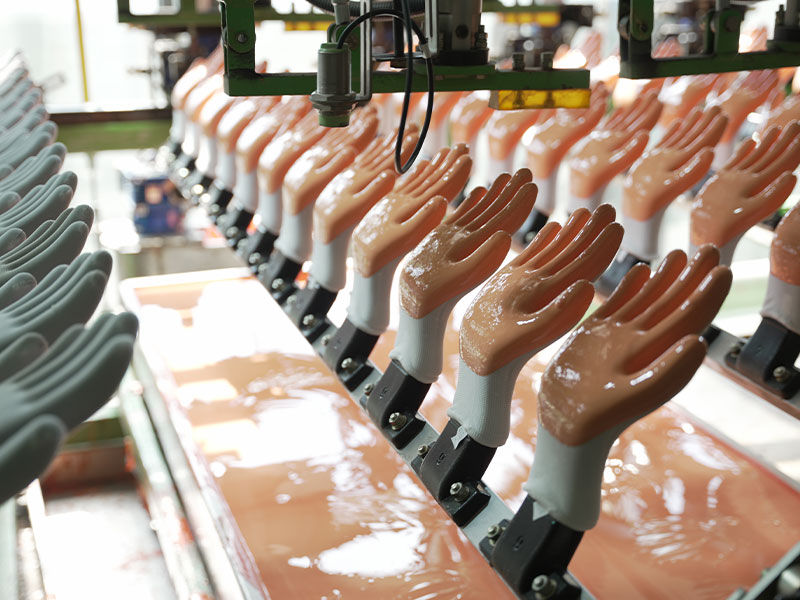
Most premature glove failures trace back to habits rather than a defective box. Correcting a few small habits usually solves the problem faster than switching brands.
How a glove comes off matters almost as much as how it goes on, both for hygiene and for keeping torn fragments out of food. The standard technique pinches the outside of one glove near the wrist, peels it off inside out, balls it into the palm of the still-gloved hand, then slides two fingers of the bare hand under the wrist of the second glove and peels that one off as well, trapping the first glove inside it.
Rushing this step, especially by yanking gloves off by the fingertips, is a common way small torn fragments go unnoticed on a cutting board or counter. Building the correct removal motion into training reduces this risk more reliably than simply asking staff to be careful.
Disposable plastic gloves remain the standard for cooking because they eliminate the washing and drying cycle that reusable rubber gloves require, and a fresh pair costs a fraction of a cent when bought in bulk. Reusable nitrile or rubber gloves make more sense for tasks like handwashing dishes or scrubbing pans, where a single pair can survive dozens of cycles.
The trade-off is straightforward: disposables win on hygiene and convenience for direct food contact, while reusables win on long-term cost for cleaning tasks that do not touch food directly. Most working kitchens keep both on hand rather than choosing one exclusively.
A case of a thousand disposable PE gloves typically costs a small fraction of what a comparable volume of reusable rubber gloves would cost if replaced at the same frequency reusables are expected to last. The real cost difference emerges over time: reusable gloves need periodic replacement as they degrade from repeated washing, while disposables are simply replaced glove by glove as needed, making the ongoing cost easier to predict and budget for in a commercial setting.
Keep boxes in a cool, dry drawer rather than a shelf above the stove, since heat and humidity both accelerate film degradation. Store gloves flat rather than crushed under heavier items, which can pre-stress the thumb crotch fold before the glove is even opened. Buy in quantities that will be used within a reasonable window, since even unopened boxes lose some flexibility after long periods of storage, making the thumb crotch area more prone to cracking on first use.
Mounting dispenser boxes at multiple stations, rather than one central location, measurably reduces the temptation to reuse a torn or dirty glove simply because a fresh one is inconvenient to reach. Placing a box within arm's reach of each prep station, the handwashing sink, and the raw protein station covers the points where glove changes happen most often.
Disposable gloves generate more packaging waste than reusable alternatives, which has pushed some manufacturers to offer thinner, lower-waste PE options for light tasks alongside their standard lines. A practical middle ground many kitchens adopt is reserving disposable gloves for direct raw food contact and cross-contamination control, while switching to reusable gloves for cleaning and non-food tasks. This reduces total glove consumption without compromising the hygiene benefits where they matter most.
Buying the correct thickness and size for each task also reduces waste indirectly, since an oversized or undersized glove is more likely to tear early and need replacing mid-task, effectively doubling consumption for that single job.
| Problem | Likely Cause | Fix |
|---|---|---|
| Gloves tear within minutes of putting them on | Wrong size or weak thumb crotch seal | Re-check sizing chart and test a sample glove before bulk use |
| Gloves slip off during wet tasks | Smooth-finish film with no fingertip texture | Switch to a textured-fingertip TPE glove |
| Gloves feel stiff and crack on first wear | Long storage time or nearby heat exposure | Rotate stock and store away from heat sources |
| Hands sweat heavily inside gloves | Non-breathable film during long wear sessions | Take short breaks between tasks and change gloves more frequently |
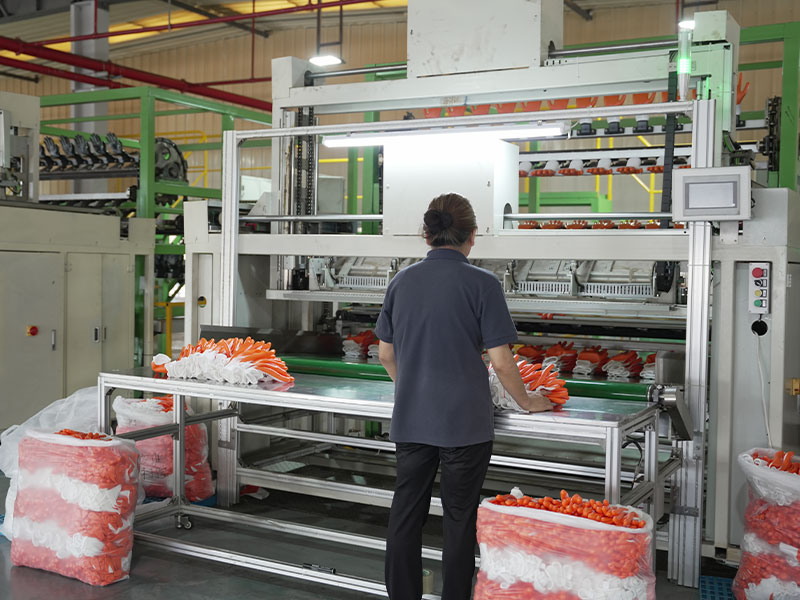
Before committing to a large case order, a quick inspection of a sample box can save significant frustration and waste later.
| Term | Meaning |
|---|---|
| Mil | A unit of thickness equal to one thousandth of an inch, used to describe film gauge |
| Thumb crotch | The curved seam where the thumb panel meets the palm panel of the glove |
| Ambidextrous cut | A glove pattern designed to fit either hand equally |
| Textured fingertip | A raised or matte pattern added to fingertips to improve grip when wet |
| Dispenser box | A packaging format that allows gloves to be pulled one at a time from an opening |
That spot is the thumb crotch, the curved seam between the thumb and palm panels. It carries the most stress during gripping motions, so it is almost always the first place a glove fails, especially if the cut is narrow or the seal is thin.
Not necessarily. Thickness helps resist puncture, but durability at the thumb crotch depends more on the width of the cut and the quality of the seal than on overall film thickness alone.
No. Standard plastic gloves are not designed for heat resistance and can soften or melt near direct heat. Use insulated mitts for anything involving hot surfaces or open flame.
Change gloves whenever switching between raw and ready-to-eat ingredients, whenever a tear appears, and after any task involving raw meat, poultry, or seafood, regardless of how long the previous pair has been worn.
TPE generally performs better for kneading because it stretches more like natural rubber and tolerates repeated flexing at the thumb crotch better than the stiffer PE film.
Size up for tasks involving grease, heat, or extended wear, and size down for detail work such as plating or garnishing where fingertip sensitivity matters more.
The price difference is usually small per glove, often a fraction of a cent, but it adds up in reduced waste since fewer gloves need to be discarded mid-task due to tearing.
No. Gloves should be changed between raw protein and other ingredients to avoid cross-contamination, even if the gloves show no visible damage.
This is usually a property of the film formulation itself, more common in vinyl and some TPE blends, and is not a sign of a defect on its own, though it can make gloves harder to separate one at a time from the dispenser box.
A faint plastic smell is common with fresh polymer film and typically fades quickly once the box is opened and exposed to air. A strong or unusual odor is worth flagging with the supplier.
Gloves matter most for raw protein handling and any task with a cross-contamination risk. For tasks like stirring a pot or plating already-cooked food, thorough handwashing is often the more practical routine, with gloves reserved for the higher-risk steps.
No. Even a small tear compromises the barrier the glove is meant to provide and increases the risk of a fragment breaking off unnoticed during food handling. Any visible tear means it is time for a new glove.
Glove Colors Guide: Meanings, Selection Tips and Custom Options for Work Gloves
Which Glove Is Recommended for Cosmetologists? Nitrile Guide
Your email address will not be published. Required fields are marked *
You can contact to me using this form.