
 中文简体
中文简体
Product Consultation
Your email address will not be published. Required fields are marked *
Content
For cosmetologists, nitrile gloves are the recommended glove type, and the reason comes down to one simple fact: salon work involves constant contact with harsh chemical formulations, including hair bleach, ammonia-based color, perm solution, acetone, and acrylic monomers, and nitrile is the only common disposable material that resists nearly all of them without breaking down quickly. Latex offers comfort but triggers allergic reactions in a meaningful share of clients and stylists, while vinyl is inexpensive but tears easily and offers little chemical resistance for anything beyond light-duty tasks like shampooing.
Beyond the base material, glove construction detail matters just as much as the polymer itself. One feature that separates a glove that survives a full shift from one that splits mid-service is the thumb crotch — the junction where the thumb meets the palm. This is the single highest-stress point on any glove, and gloves with a reinforced or properly shaped thumb crotch resist splitting far longer than gloves where this area is thin or poorly seamed.
This guide goes far beyond a simple material recommendation. It walks through mil thickness, thumb crotch construction, sizing, texture, powder-free considerations, task-by-task selection, glove lifespan, storage, cost planning, and the small design details that separate a glove that lasts a full shift from one that fails halfway through a service. Whether the goal is protecting hands from bleach and acetone, keeping clients comfortable, or simply reducing how often gloves need replacing mid-appointment, the details below cover the full decision from every angle.
Cosmetology work is chemically demanding in a way that few other service industries are. A single day might involve mixing oxidative hair color, applying a relaxer, soaking off gel polish with pure acetone, and disinfecting tools and surfaces between clients. Nitrile is a synthetic copolymer, so it contains no natural rubber latex proteins, which removes the risk of triggering Type I latex allergies in either the technician or the client. It also has a denser molecular structure than latex or vinyl, which slows the rate at which solvents and dyes penetrate the material.
Independent testing on acetone exposure has repeatedly shown that thin, standard nitrile gloves still have a limited breakthrough window, meaning the chemical eventually reaches the skin if a single glove is worn for an extended soak-off session. Thicker nitrile gloves in the 4 to 6 mil range extend that window considerably and are the reason many nail technicians switch gloves partway through an acetone-heavy service rather than relying on one pair for hours.
Beyond raw chemical resistance, nitrile also holds its shape better than latex after repeated stretching. Latex gloves tend to loosen and thin unevenly after being pulled on and off multiple times during a shift, while nitrile keeps a more consistent fit through repeated donning and doffing, which matters in a job where gloves may be changed a dozen times or more in a single day.
Practical takeaway: keep two mil weights on hand — a lighter 3 to 4 mil glove for general services like shampooing and blow-drying, and a heavier 5 to 6 mil glove for color mixing, chemical relaxers, and acetone soak-offs.
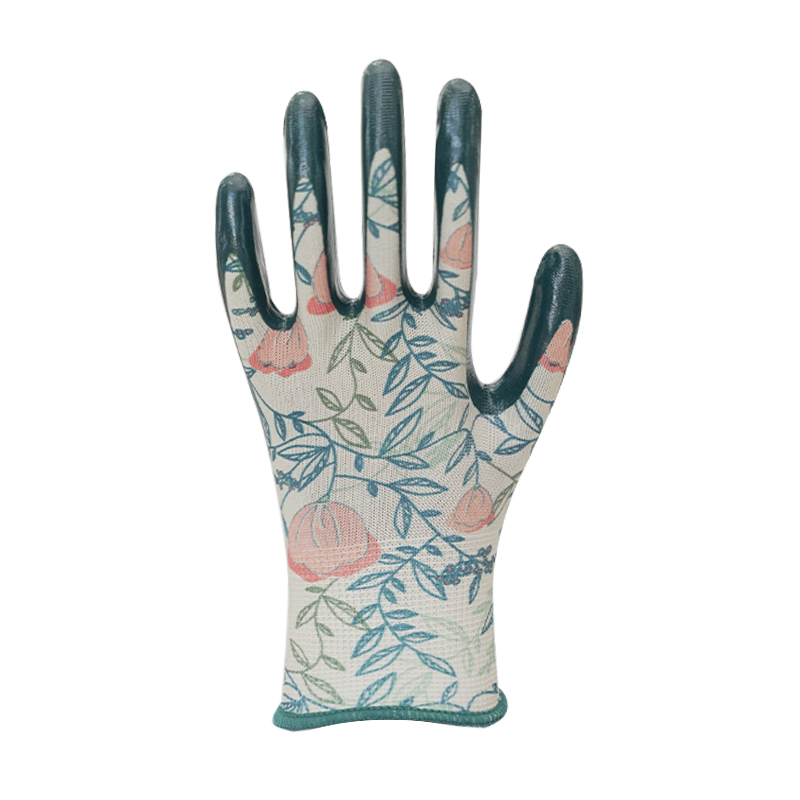
The thumb crotch is the webbed area of material between the thumb and index finger. Every time a technician grips a comb, squeezes a color bottle, or pinches a section of hair, this small zone stretches and flexes more than any other part of the glove. Glove engineers consistently identify it as the point where disposable and light industrial gloves fail first, which is why manufacturers of durable work gloves specifically reinforce this region with thicker material, welted seams, or an extra layer of coating.
Repeated stretching during gripping and pinching motions thins the material at this junction faster than anywhere else on the hand.
A slightly thicker or better-shaped thumb crotch resists splitting during extended gripping tasks like sectioning hair or filing nails.
A split thumb crotch mid-service exposes skin to dye, bleach, or acetone at the exact moment contact risk is highest.
For cosmetologists specifically, this matters more than in many other fields because so much of the job involves sustained pinching and gripping — sectioning hair with a tail comb, holding foils in place, or gripping a nail file for repeated strokes. Gloves marketed with a reinforced thumb crotch or a seamless, form-fitted thumb design tend to hold up noticeably longer during these motions than flat-cut, economy-grade disposables.
There are two common manufacturing approaches for strengthening this zone. The first is a shaping adjustment during the mold-dipping process, where the thumb is curved rather than cut flat, which naturally reduces the tension placed on the webbing when the hand grips something. The second is a targeted coating application, where a small amount of extra polymer compound is applied specifically to the thumb crotch during production, creating a slightly thicker patch in exactly the zone that experiences the most wear. Gloves using either approach, or both together, generally outlast flat-cut, uniformly thin disposables during repetitive salon tasks.
When comparing glove options, a quick way to judge thumb crotch quality without lab equipment is to gently stretch the webbing between thumb and forefinger before purchase, if a sample is available. A glove that resists thinning or shows a visibly heavier patch of material in that zone is more likely to hold up through a full chemical service than one that feels uniformly thin across the entire hand.
Glove thickness is measured in mils, with one mil equal to one-thousandth of an inch. Thickness affects both chemical resistance and tactile sensitivity, so the right choice is always a trade-off between protection and dexterity.
| Thickness (mil) | Best For | Dexterity Level |
|---|---|---|
| 3 mil | Shampooing, blow-drying, general handling | High |
| 4 mil | Hair color application, waxing, general chemical handling | Moderate to High |
| 5 to 6 mil | Bleach mixing, chemical relaxers, extended acetone exposure | Moderate |
| 8 mil and above | Heavy cleaning, industrial-strength disinfectants, tool sanitizing | Lower |
A useful rule of thumb: the longer the glove will stay in contact with a single strong chemical, the heavier the mil weight should be. A quick color touch-up does not demand the same protection as a full acetone soak-off that can run fifteen minutes or longer per hand.
It is also worth noting that mil thickness is not perfectly uniform across a single glove. Most disposable gloves are thinner at the fingertips, where sensitivity matters most, and slightly thicker at the palm and cuff. A well-made 4 mil glove with a reinforced thumb crotch can outperform a uniformly thicker 5 mil glove that has no reinforcement at all in that specific zone, since failure almost always starts at the crotch rather than the fingertip or palm.
| Material | Chemical Resistance | Allergy Risk | Durability | Tactile Sensitivity |
|---|---|---|---|---|
| Nitrile | High | Very Low | High | Good |
| Latex | Moderate | High | Moderate | Excellent |
| Vinyl | Low | Very Low | Low | Moderate |
Vinyl still has a place in the salon: it is inexpensive enough to swap constantly, which makes it reasonable for brief, low-risk tasks such as handing a client a towel or adjusting a cape. It should not be relied on for anything involving bleach, ammonia-based dye, or acetone, since it tears under stretching far sooner than nitrile, particularly at the thumb crotch.
Latex remains popular in a handful of settings where extreme tactile sensitivity is the top priority, such as detailed lash or brow work, but its higher allergy profile means most salons now reserve it for very specific tasks rather than using it as an all-purpose glove. Any salon that keeps latex on hand should also stock a nitrile alternative and clearly label both, so technicians can switch immediately if a client mentions a latex sensitivity.
Cosmetology is precision work. Sectioning fine strands of hair, gripping small foils, or steadying a nail brush all demand a glove that does not slip against wet or oily surfaces. Textured fingertips — small raised patterns molded into the nitrile during production — are now standard on most professional-grade cosmetology gloves and make a measurable difference when handling wet hair or slick styling products.
Fingertip thickness deserves special attention for anyone doing fine motor work such as nail art, brow shaping, or precision color placement. Many professional-grade gloves are engineered with a slightly thinner fingertip zone than the rest of the glove specifically to preserve tactile feedback, while keeping the palm and thumb crotch at a heavier gauge for durability. This uneven thickness profile, sometimes called a graduated or ergonomic design, allows a single glove to deliver both the sensitivity needed for detail work and the structural strength needed to survive a full shift of gripping motions.
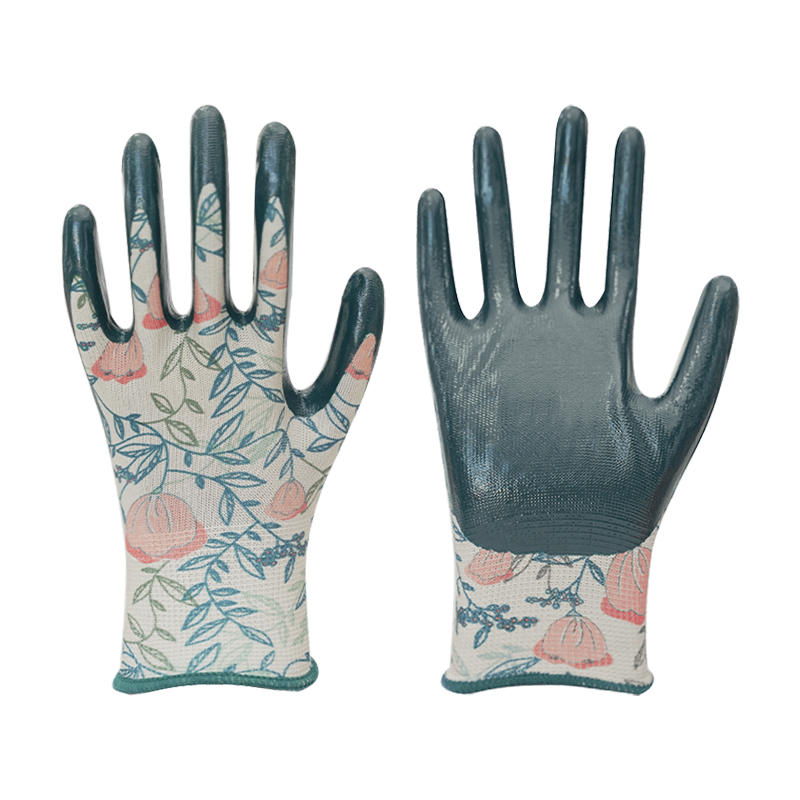
An oversized glove bunches at the fingertips and stretches unevenly across the thumb crotch, accelerating wear in exactly the spot that is already the weakest point. An undersized glove restricts circulation over a long shift and tears sooner under tension. Measuring hand circumference around the widest part of the palm, excluding the thumb, is the most reliable way to select a size.
| Glove Size | Hand Circumference |
|---|---|
| Small | approx. 6.5 to 7.5 inches |
| Medium | approx. 7.5 to 8.5 inches |
| Large | approx. 8.5 to 9.5 inches |
| X-Large | approx. 9.5 inches and above |
Salons that employ technicians of many different hand sizes benefit from stocking at least three sizes rather than a single medium-fits-most option. A glove that is even slightly too large concentrates stress unevenly across the thumb crotch every time the hand grips something, since the extra material has to fold and compress rather than move naturally with the joint, which shortens the glove's usable life considerably compared to a properly fitted pair.
Powdered gloves were once common because the powder made gloves easier to put on and take off, but the cornstarch coating can transfer onto client skin, interfere with product application, and in rare cases contribute to skin irritation. Powder-free nitrile gloves are now the standard in professional cosmetology settings for this reason — they leave no residue on the client's scalp, skin, or nails, which matters directly for color accuracy and product performance.
Manufacturers achieve a powder-free finish either through chlorination, which slightly hardens the outer surface of the glove to reduce tackiness, or through a polymer coating applied to the interior surface that allows the glove to slide on and off smoothly without any powder at all. Polymer-coated interiors tend to feel softer against the skin over a long shift, which is a meaningful comfort factor for technicians who wear gloves for the majority of their working hours.
Beyond powder, glove color is worth a practical mention: darker gloves, particularly black, are widely favored among colorists because they do not visibly stain the way lighter gloves do after repeated contact with dye, which keeps a stylist's hands looking clean and professional throughout a full day of color services. Lighter colors such as white or light blue remain popular in esthetics and nail services, where clients often prefer to see clean, unstained gloves as a visible sign of hygiene during a facial or manicure.
A 4 to 6 mil nitrile glove with a reinforced or curved thumb crotch is the standard recommendation, since color mixing and application both involve prolonged contact with ammonia and peroxide compounds and repetitive gripping of foils or brushes. Many colorists also prefer a slightly longer cuff for this service, since it protects the wrist during bowl mixing and reduces the chance of dye running under the glove edge.
Relaxer formulations are among the harshest chemicals used in a salon, so a heavier 6 mil nitrile glove is generally preferred over a lighter option, even at the cost of some dexterity. Technicians applying relaxer with bare fingertip contact for smoothing often double up with a thinner glove underneath a heavier outer glove during particularly intensive services.
Because pure acetone breaks down thin gloves quickly, technicians performing extended gel or acrylic removal typically change gloves partway through a soak-off rather than relying on a single pair for the full service. A textured fingertip pattern also helps considerably here, since wet, acetone-soaked cotton and foils become slippery quickly.
Facial treatments call for a thinner, high-sensitivity nitrile glove, usually 3 mil, since the priority here is tactile feedback for extractions and product massage rather than heavy chemical protection. A snug, form-fitted cut matters more here than in almost any other service, since even small amounts of excess material at the fingertips reduce the precision needed for extractions.
Waxing services benefit from a mid-weight 4 mil nitrile glove that resists hot wax adhesion better than latex while still allowing enough sensitivity to judge wax temperature and consistency through the glove during application and removal.
Most glove failures do not happen suddenly. There are usually early warning signs that a glove is close to splitting, and recognizing them mid-service allows a technician to swap gloves before any chemical actually reaches the skin.
Training staff to recognize these early cues, rather than waiting for a glove to visibly rip, is one of the simplest ways to reduce chemical exposure incidents in a busy salon without adding any real cost or time to a service.
Treating gloves as single-use rather than stretching one pair across an entire shift is the single most effective habit for both hygiene and hand protection, regardless of how durable the thumb crotch construction is.
A single busy chair can go through several boxes of gloves in a week once color services, nail work, and general handling are all counted together. Buying in bulk case quantities rather than individual boxes typically brings the per-glove cost down noticeably, and many salons find it worthwhile to negotiate standing orders with a supplier once monthly usage becomes predictable.
A useful planning approach is to track glove usage by service type for a few weeks, then stock two tiers accordingly: a higher-volume, lighter mil option for general tasks, and a smaller supply of the heavier, more reinforced option reserved specifically for chemical-intensive services like relaxers and extended acetone work. This tiered approach avoids overspending on heavy-duty gloves for tasks that do not need them, while still keeping the stronger option available whenever a service calls for it.
Nitrile gloves are the recommended choice for cosmetologists because they resist the ammonia, peroxide, and acetone compounds common in salon work far better than latex or vinyl, while also removing the risk of latex allergy reactions.
The thumb crotch is the area between the thumb and index finger, and it flexes more than any other part of the glove during gripping and pinching tasks like sectioning hair or holding tools. Gloves with a reinforced or curved thumb crotch resist splitting in this high-stress zone far longer than flat-cut, economy gloves.
A 4 to 6 mil nitrile glove is generally recommended for color mixing and application, since it balances chemical resistance against ammonia and peroxide with enough dexterity to handle foils, brushes, and sectioning clips.
Powder-free nitrile gloves are the standard in professional settings because the powder coating found on older glove styles can transfer onto a client's skin or hair and interfere with product application and color accuracy.
Gloves should always be changed between clients, and mid-service any time a tear, pinhole, or thinning is noticed, especially at the thumb crotch. For long acetone soak-offs, many nail technicians change gloves partway through the service rather than relying on a single pair.
Vinyl gloves are suitable only for brief, low-risk tasks such as handing a client a towel, since they offer low chemical resistance and tear more easily at the thumb crotch than nitrile, making them unsuitable for color, relaxer, or acetone-heavy work.
Glove color has no meaningful effect on chemical resistance or durability, but darker colors such as black hide dye stains better, which is why many colorists prefer them, while lighter colors are often chosen for esthetics and nail work where visible cleanliness is a priority.
A curved thumb design follows the natural angle of the thumb, which reduces tension on the thumb crotch during gripping motions, while a flat-cut thumb sits at a straight angle and places more strain on that junction, making it more prone to splitting during repetitive tasks.
Measure hand circumference around the widest part of the palm, excluding the thumb, and match it against a size chart. A properly sized glove reduces bunching at the fingertips and uneven stretching at the thumb crotch, both of which shorten a glove's usable life.
Plastic Gloves for Cooking: Materials, Sizing & Durability Guide
Disposable Mechanic Gloves: Nitrile vs Latex vs Vinyl Guide
Your email address will not be published. Required fields are marked *
You can contact to me using this form.