
 中文简体
中文简体

Product Consultation
Your email address will not be published. Required fields are marked *
Content
Most people assume that wearing gloves is always safer than not wearing them. That assumption is wrong. There are clear, well-documented situations where wearing latex gloves or nitrile gloves is either unnecessary, counterproductive, or outright dangerous. Understanding those situations is not just about personal comfort — it directly affects safety outcomes, skin health, cross-contamination risks, and even the well-being of the people around you.
The cases where you should skip gloves fall into several categories: known allergies, tasks where gloves reduce dexterity and increase accident risk, situations involving heat or electrical hazards, food handling contexts that create false security, and environments where gloves themselves become contamination vectors. Each of these deserves a close look.
Latex gloves are made from natural rubber latex, a material derived from the Hevea brasiliensis tree. For many people, repeated exposure to latex proteins triggers an immune response. According to the American Academy of Allergy, Asthma and Immunology, latex allergy affects approximately 1–6% of the general population and up to 17% of healthcare workers who use latex gloves regularly.
Reactions range from contact dermatitis — redness, itching, and blistering at the point of contact — to systemic anaphylaxis, which can be life-threatening. If you or anyone nearby has a known latex sensitivity, latex gloves should not be worn at all. This applies not just to the person wearing the gloves, but also to anyone in close proximity, because latex proteins can become airborne, particularly with powdered latex gloves.
In many healthcare settings, latex gloves have been phased out entirely for this reason. Nitrile gloves are the standard replacement in hospitals, dental offices, and laboratories across Europe and North America precisely because they are latex-free and do not carry this allergy risk.
If any of the above apply, the decision is simple: avoid latex gloves entirely and switch to nitrile or vinyl alternatives.
Nitrile gloves are widely considered the safer alternative for people with latex allergies, and in most cases that is accurate. However, nitrile gloves are not universally tolerated either. Some individuals develop reactions to the chemical accelerators used during the nitrile manufacturing process — compounds like thiurams, carbamates, and mercaptobenzothiazole. These chemicals can cause Type IV delayed hypersensitivity reactions, typically presenting as a dry, itchy rash that appears 12 to 48 hours after exposure.
A 2019 study published in Contact Dermatitis found that accelerator-free nitrile gloves significantly reduced skin reactions in sensitized workers, which suggests that the glove chemistry itself — not just the base material — matters when selecting protective gloves. If someone experiences ongoing skin problems with standard nitrile gloves, accelerator-free nitrile options or neoprene gloves may be more appropriate.
The practical takeaway: if wearing nitrile gloves regularly causes persistent skin dryness, cracking, redness, or itching, that is a signal to investigate whether a chemical sensitivity is developing — and possibly to stop wearing that specific glove formulation.
Latex and nitrile gloves offer no meaningful protection against heat. Their melting points are well below the temperatures found in kitchen cooking, welding, glassblowing, or industrial metal handling. Wearing nitrile or latex gloves in high-heat environments can make burns worse — the material melts and adheres to skin, turning a contact burn into a far more serious injury.
The same applies to low-temperature extremes. Nitrile gloves become brittle and lose flexibility at temperatures below approximately -20°C (-4°F), making them unreliable for cryogenic work or extended cold storage handling. Latex gloves perform somewhat better in cold but still lack proper insulation for prolonged cold exposure.
| Task | Why Nitrile/Latex Fails | Better Alternative |
|---|---|---|
| Oven use / cooking | Melts under heat | Silicone or aramid oven gloves |
| Welding | No flame resistance | Leather welding gloves |
| Cryogenic handling | Becomes brittle, tears | Cryogenic insulated gloves |
| Electrical work (live circuits) | No dielectric protection | Rated electrical insulating gloves |
| Chainsaw / cutting work | Zero cut resistance | ANSI A4 or higher cut-resistant gloves |
A common mistake in industrial settings is using nitrile gloves as a catch-all PPE item. Nitrile offers excellent chemical resistance against many solvents and oils, but it is not rated for every chemical either. Strong oxidizers, ketones, and certain aromatic compounds can permeate nitrile rapidly. Always consult a chemical resistance chart before selecting any glove for hazardous substance handling.
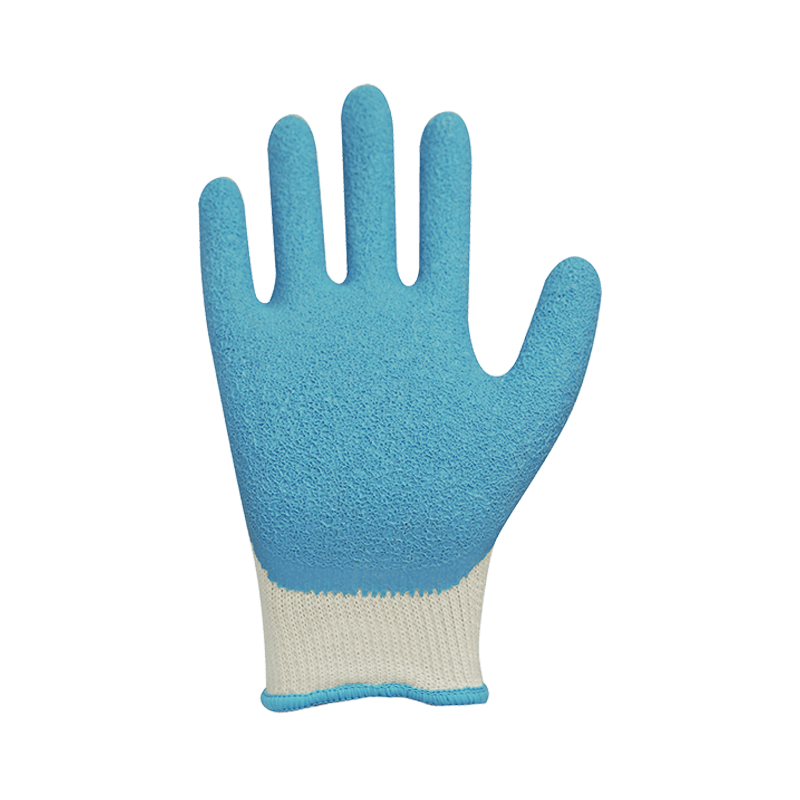
There is a counterintuitive but well-established finding in occupational safety research: gloves can increase accident rates in tasks that require fine tactile feedback. OSHA and the National Institute for Occupational Safety and Health (NIOSH) both note that glove use near rotating machinery parts is a recognized cause of entanglement injuries — in some cases, the glove catches on a moving part and pulls the hand into the mechanism far faster than a bare hand would.
For this reason, many machine shops and production facilities explicitly prohibit glove use around lathes, drill presses, milling machines, and band saws. The risk of the glove catching on spinning equipment outweighs the benefit of hand protection from abrasion or minor cuts.
In precision assembly work — electronics manufacturing, watchmaking, microsurgery — gloves can reduce tactile sensitivity enough to cause component damage or procedural errors. Thin nitrile gloves mitigate this somewhat, but they cannot fully replicate the sensitivity of bare fingertips. Some surgical procedures are performed with single-layer gloves specifically calibrated for thickness to preserve feel.
Latex and nitrile gloves can become slippery when wet with certain fluids, including water-based lubricants and some cleaning solutions. In a task that requires a secure grip on a sharp object — a scalpel, a kitchen knife, a glass panel — a glove that reduces grip security increases the chance of a slip-related injury. If the contamination or chemical risk is low, bare hands with good grip may actually be safer.
This is one of the most misunderstood areas of glove use. In many food service environments, gloves are worn not because they are the most hygienic option, but because they look more hygienic to the public. The reality is more nuanced.
Research from the FDA and multiple food safety auditing bodies has shown that gloved hands are changed far less frequently than bare hands are washed during food preparation. A food handler who washes their hands every few minutes may maintain a lower bacterial load on their skin than someone who wears the same pair of nitrile gloves for 20–30 minutes across multiple tasks.
Cross-contamination via gloves is a documented cause of foodborne illness outbreaks. The glove itself does not kill pathogens — it just transfers them from surface to surface if not changed frequently. In home cooking contexts, wearing gloves while handling raw meat and then touching other surfaces without changing gloves is actively worse than thorough handwashing would be.
There are specific contexts where food-safe gloves are genuinely appropriate: handling ready-to-eat food when the preparer has an open wound on their hand, working with doughs or batters where hand heat and contamination risk is high, or complying with regulatory requirements in professional settings. Outside those scenarios, disciplined handwashing outperforms casual glove use.
Many food regulatory agencies, including the FDA in the United States, have moved away from recommending latex gloves for food handling precisely because latex proteins can transfer to food and trigger allergic reactions in consumers with latex sensitivity. Nitrile gloves or vinyl gloves are generally the preferred options in food service when gloves are used at all.
Extended glove use — particularly in hot or humid conditions — creates a moist microenvironment against the skin that promotes maceration, bacterial overgrowth, and fungal infections. Occupational Contact Dermatitis, much of it caused by wet work under gloves, affects approximately 30–40% of healthcare workers at some point in their careers, according to data from dermatology journals covering European and North American healthcare systems.
Workers who already have psoriasis, eczema, or chronic hand dermatitis may find that wearing gloves continuously throughout a shift worsens their condition rather than protecting it. In these cases, reducing glove use to only the highest-risk moments — and using moisturizing barrier creams during breaks — is a more sustainable approach recommended by occupational dermatologists.
Cotton glove liners worn underneath nitrile gloves can absorb moisture and reduce skin irritation for sensitive users, but they also reduce tactile sensitivity further and may not be suitable in all clinical environments where uncompromised grip is necessary.
Any of these patterns should prompt a review of glove selection and usage frequency, and ideally a consultation with an occupational dermatologist or allergist for patch testing.
During and after the COVID-19 pandemic, glove use expanded dramatically into everyday public spaces — supermarkets, gas stations, offices, and general retail. For most of these contexts, the evidence does not support glove use as an infection-prevention measure. The CDC, WHO, and European Centre for Disease Prevention and Control all clarified during the pandemic that hand hygiene through washing or sanitizing was more effective than gloves for non-clinical daily activities, partly for the same reasons described in the food handling section — gloves give a false sense of security and are rarely changed as frequently as hands are washed.
In practical terms, this means there is no meaningful benefit to wearing nitrile or latex gloves for:
Overuse of disposable gloves also has environmental consequences. A single nitrile glove takes approximately 100 years to decompose in landfill, and the volume of disposable gloves discarded globally each year runs into the tens of billions. Choosing not to wear gloves when the protection benefit is negligible is both a safety-informed and environmentally conscious decision.
Both nitrile gloves and latex gloves have published chemical resistance ratings, and those ratings are not universal. Using gloves outside their rated chemical compatibility range is not just ineffective — it is dangerous, because it may provide a false sense of protection while allowing permeation of hazardous substances.
Nitrile gloves perform well against petroleum-based oils, most alcohols, and many dilute acids. However, they break down relatively quickly when exposed to:
Latex gloves offer broader resistance to water-based solutions and certain biohazards but degrade faster than nitrile in ozone-rich environments and with many petroleum solvents. For strong chemical work — concentrated acids, base solutions above pH 12, or organic solvents — thicker butyl rubber, neoprene, or laminated gloves are required.
The glove thickness matters significantly: a standard 4–6 mil disposable nitrile glove offers breakthrough times measured in minutes against aggressive chemicals, while a 15–20 mil industrial nitrile glove may resist the same chemical for an hour or more. Disposable examination gloves — the type most people are familiar with — are simply not designed for sustained chemical work.

In clinical environments, the decision to wear gloves is governed by Standard Precautions — guidelines developed by the CDC that specify when gloves are required based on anticipated exposure to blood, body fluids, mucous membranes, or non-intact skin. These guidelines explicitly state that gloves are not required for every patient contact. Routine patient interactions — taking a blood pressure reading, adjusting a pillow, discussing a care plan — do not require gloves under Standard Precautions.
In fact, unnecessary glove use in clinical settings has been linked to reduced hand hygiene compliance. A study published in Infection Control and Hospital Epidemiology found that healthcare workers who wore gloves unnecessarily were significantly less likely to perform hand hygiene when removing them, contributing to pathogen transfer between patients.
For patients who are themselves latex-allergic, any gloves used in their care — as well as any other latex-containing equipment — must be latex-free. This is typically flagged prominently in patient records and is a standard part of pre-admission screening in surgical environments.
Double gloving — wearing two layers of gloves — is recommended in high-risk surgical procedures where sharps injuries or blood-borne pathogen exposure is elevated. However, for routine examination or low-exposure tasks, double gloving significantly reduces tactile sensitivity without adding meaningful protection. It is an example of a context where more glove use does not translate into better outcomes.
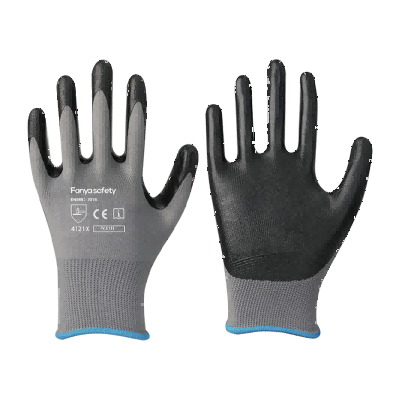
Rather than defaulting to gloves as the automatic answer to any hand protection question, a more structured approach asks three questions before reaching for a box of nitrile or latex gloves:
If the hazard is genuine and the glove is rated for it, wear it. If the hazard is low or the glove is not the right type, reconsider. Thoughtful glove selection — including the deliberate choice not to wear gloves in certain situations — is a mark of genuine safety awareness, not a shortcut.
What Destroys Nitrile Gloves? Chemicals, Heat & More
Why Do People Wear Black Nitrile Gloves? Reasons Explained
Your email address will not be published. Required fields are marked *
You can contact to me using this form.