
 中文简体
中文简体

Product Consultation
Your email address will not be published. Required fields are marked *
Content
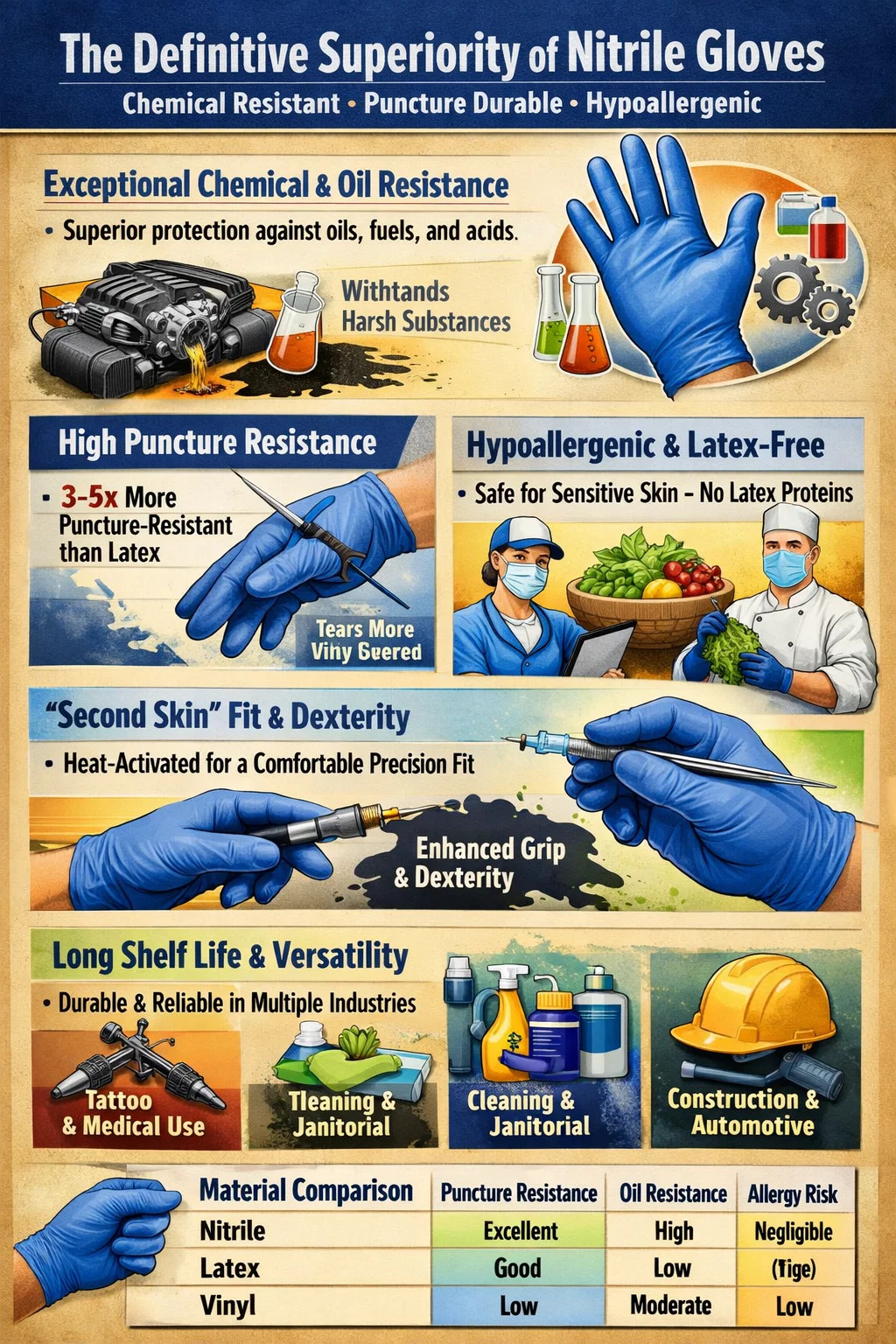
The primary factor that makes nitrile gloves special is their unmatched combination of chemical resistance, puncture durability, and hypoallergenic properties compared to latex or vinyl alternatives. Unlike natural rubber, nitrile is a synthetic copolymer that provides a robust barrier against petroleum-based products, oils, and acids, making it the industry standard for automotive, medical, and industrial applications.
One of the standout features of nitrile glove is their ability to withstand harsh substances that would melt or degrade other materials. While latex gloves often fail when exposed to gasoline or grease, nitrile remains structurally sound.
In automotive workshops, mechanics rely on these gloves because they do not swell or weaken when handling motor oil or brake fluid. For example, in a heavy-duty industrial setting, a high-quality nitrile barrier can resist permeation from various solvents for a significantly longer duration than vinyl.
When comparing physical toughness, nitrile gloves are often rated to be three to five times more puncture-resistant than latex gloves. This physical strength is crucial in environments where sharp tools, needles, or jagged metal edges are present.
An interesting property of nitrile is how it reacts to being punctured. While a latex glove might have a tiny, invisible pinhole, a nitrile glove tends to tear more visibly once the surface is breached. This allows the wearer to immediately recognize that their protective barrier has been compromised and change gloves before hazardous materials touch the skin.
| Material Type | Puncture Resistance | Oil Resistance | Allergy Risk |
|---|---|---|---|
| Nitrile | Excellent | High | Negligible |
| Latex | Good | Low | High (Type I) |
| Vinyl | Low | Moderate | Low |
Medical facilities and food service businesses have largely shifted to nitrile gloves to eliminate the risk of Type I latex allergies. For many people, exposure to natural rubber latex can cause severe skin irritation or even respiratory distress.
Since nitrile is a synthetic material (Acrylonitrile Butadiene), it does not contain the proteins found in natural rubber. This makes it a universal safety choice for teams where individual allergy histories might be unknown. Whether you are prepping food or performing a clinical exam, nitrile ensures that neither the worker nor the client suffers an allergic reaction.
Early synthetic gloves were stiff and uncomfortable, but modern nitrile gloves are designed to react to body heat. As the glove warms up to your hand temperature, the material relaxes and conforms to your hand’s specific shape.
This "memory" effect provides incredible dexterity, which is why surgeons and dental hygienists favor them. The micro-textured fingertips found on many nitrile products ensure a firm grip on small needles or wet instruments, reducing hand fatigue during long shifts.
Another special aspect of nitrile gloves is their longevity. Natural latex is prone to dry-rotting over time, especially if exposed to UV light or ozone. In contrast, nitrile is highly stable.
A box of nitrile gloves can sit in a first-aid kit or a garage for years without losing its elasticity or protective qualities. This makes them a more cost-effective long-term investment for emergency preparedness or occasional home DIY projects where gloves are not used daily.
The unique properties of nitrile allow it to bridge the gap between various professional needs. From heavy-duty 8-mil thick gloves used in construction to 3-mil exam-grade gloves used in hospitals, the material is incredibly adaptable.
In the tattoo industry, black nitrile is preferred because it hides ink stains and resists the petroleum jelly used during the process. In janitorial work, they protect against bleach and ammonia-based cleaners that would easily permeate through cheaper vinyl gloves. This versatility proves that nitrile is not just another disposable option—it is a specialized tool for safety.
Your email address will not be published. Required fields are marked *
You can contact to me using this form.