
 中文简体
中文简体

Product Consultation
Your email address will not be published. Required fields are marked *
Content
Nitrile gloves are degraded and ultimately destroyed by prolonged exposure to strong organic solvents, concentrated acids and bases, elevated heat, certain oils, and oxidizing agents such as ozone. While nitrile rubber outperforms latex and vinyl in many chemical resistance scenarios, it is far from indestructible. A single 15-minute immersion in acetone or MEK (methyl ethyl ketone) can cause a nitrile glove to swell, lose tensile strength, and fail completely. Understanding exactly what breaks nitrile down — and how quickly — is critical for anyone using these gloves in industrial, laboratory, medical, or food-handling environments.
Nitrile gloves are made from acrylonitrile-butadiene rubber, a synthetic copolymer. The acrylonitrile content typically ranges from 28% to 42% depending on the manufacturer and glove grade. A higher acrylonitrile content generally improves chemical resistance but reduces flexibility. The butadiene component is what gives the glove its elasticity but also makes it vulnerable to certain hydrocarbons and oxidizing environments. Knowing the composition helps explain why specific substances attack nitrile so effectively.
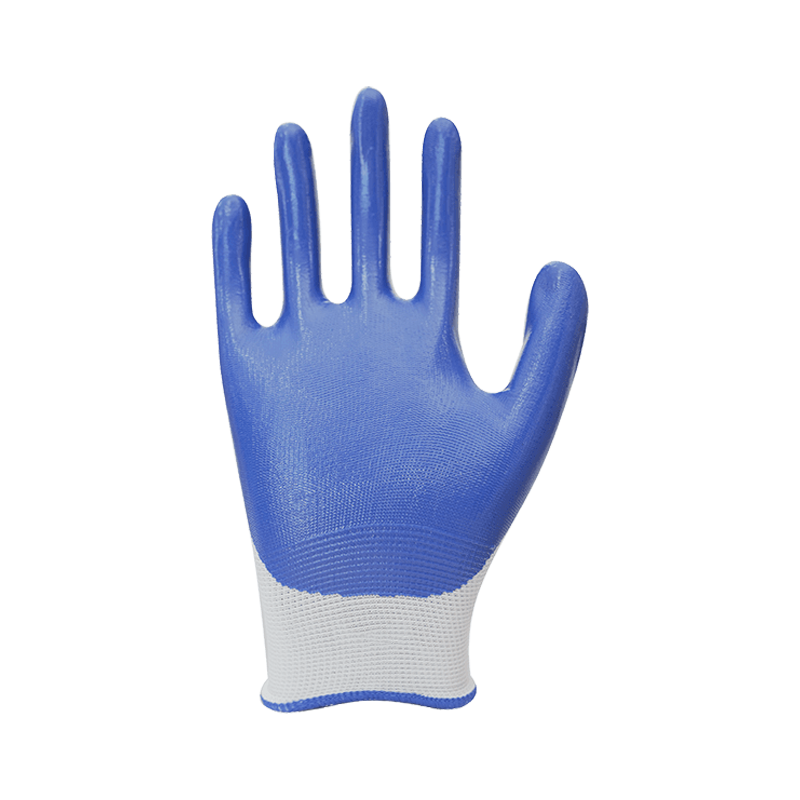
Organic solvents are the leading cause of nitrile glove failure in workplace settings. These chemicals penetrate the glove matrix, disrupt the polymer chains, and cause rapid swelling, softening, and eventual disintegration. The rate of degradation depends on the solvent's molecular size, polarity, and concentration.
Ketones — including acetone, MEK, and MIBK (methyl isobutyl ketone) — are among the most aggressive solvents for nitrile. Acetone can increase the weight of a nitrile glove by 200–400% within 30 minutes due to solvent absorption, indicating massive structural compromise. Nitrile gloves rated for acetone contact typically quote breakthrough times of under 10 minutes for standard 4–6 mil gloves. Even splash protection in acetone-heavy environments requires gloves at least 15 mil thick with verified chemical resistance testing.
Toluene, xylene, benzene, and chlorinated solvents like methylene chloride and trichloroethylene quickly attack nitrile rubber. These molecules are small enough and nonpolar enough to insert themselves between nitrile polymer chains and expand the glove's structure. In standardized permeation testing, toluene typically breaks through a standard nitrile examination glove in under 5 minutes. This makes nitrile gloves completely unsuitable for handling these solvents without a multi-layer protective approach.
Ethyl acetate, butyl acetate, and tetrahydrofuran (THF) cause moderate to severe degradation. THF is particularly aggressive — it swells nitrile visibly within minutes and is often used in labs to dissolve polymers. Esters found in paints, coatings, and adhesives share similar characteristics. Workers in automotive refinishing and coatings application who rely on nitrile gloves should be aware that many common products in those environments contain ester solvents.
| Solvent | Category | Typical Breakthrough Time (4–6 mil nitrile) | Degradation Severity |
|---|---|---|---|
| Acetone | Ketone | < 10 minutes | Extreme |
| Toluene | Aromatic hydrocarbon | < 5 minutes | Extreme |
| Methylene Chloride | Halogenated solvent | 5–15 minutes | Extreme |
| THF | Ether | < 10 minutes | Severe |
| Ethyl Acetate | Ester | 15–30 minutes | Moderate–Severe |
| Isopropyl Alcohol (IPA) | Alcohol | > 60 minutes | Low–Moderate |
Nitrile gloves handle many dilute acids reasonably well, which is one reason they are standard PPE in chemistry labs. However, concentrated acids and strong oxidizing acids are a different story entirely. At high concentrations, these chemicals attack nitrile rubber chemically — not just physically — and degrade the polymer backbone itself.
Concentrated nitric acid (above 30%) will rapidly attack nitrile rubber, causing surface discoloration, swelling, and mechanical failure within minutes. Sulfuric acid above 70% concentration similarly degrades nitrile. At these concentrations, the acids act as both chemical and oxidizing agents. Nitrile gloves rated only for laboratory use — often just 4 to 6 mil — offer virtually no protection against concentrated acid splashes beyond a few seconds. For prolonged acid handling, thicker gloves rated to 20+ mil or multi-layer laminated gloves are required.
Concentrated sodium hydroxide (lye) and potassium hydroxide attack nitrile differently from acids — through a process called saponification-like hydrolysis, where the polymer ester linkages and nitrile groups are cleaved over time. For dilute concentrations (below 20%), nitrile performs adequately. For concentrated caustic cleaning agents used in industrial pipe cleaning or chemical processing, nitrile gloves show degradation at the surface after extended exposure, becoming tacky, weakened, and prone to tearing.
Chromic acid, perchloric acid, and hydrofluoric acid all present serious degradation risks for nitrile. Hydrofluoric acid is particularly dangerous because the acid itself permeates the glove, and the fluoride ions then cause systemic toxicity — making glove integrity a life-or-death concern, not just a comfort issue. Many safety professionals recommend butyl rubber gloves over nitrile specifically for HF work.
Temperature has a direct and often underestimated impact on nitrile glove integrity. The thermal resistance of nitrile rubber is better than latex but has clear limits that are frequently exceeded in real working conditions.
Most standard nitrile examination gloves are rated for continuous use up to approximately 120°C (248°F), with some industrial-grade nitrile gloves tolerating up to 150°C in dry heat for short durations. Beyond these temperatures, the glove becomes brittle, loses elasticity, and can crack or melt onto the skin — creating a secondary burn hazard. For autoclave use, most nitrile gloves are not suitable since autoclaves operate at 121°C under pressure, which accelerates heat degradation significantly compared to dry heat at the same temperature.
Even temperatures well below the theoretical maximum can destroy nitrile gloves through repeated cycling. A glove exposed to 80°C repeatedly — such as in a food processing facility where workers alternate between hot water and cool surfaces — will show accelerated aging: surface cracking, reduced elongation at break, and loss of grip texture. Studies on nitrile aging show that every 10°C increase in storage or use temperature roughly halves the effective service life of the glove material, following the Arrhenius relationship for polymer degradation.
Direct sunlight and UV radiation cause photodegradation in nitrile, breaking double bonds in the butadiene segments and leading to surface chalking and brittleness. This is particularly relevant for outdoor workers and for stored glove inventory kept near windows. Nitrile gloves stored improperly in transparent bags near windows can lose meaningful tensile strength within just a few months of UV exposure, even if never used.
One of the most cited advantages of nitrile gloves over latex is resistance to oils and petroleum-based products. This is true to an extent, but the picture is more nuanced than many product descriptions suggest.
Nitrile provides good short-term resistance to motor oils, gear oils, and most hydraulic fluids. For mechanics and automotive technicians doing oil changes or brake work, standard 6–8 mil nitrile gloves perform well. However, prolonged immersion in petroleum-based hydraulic fluids — especially mineral oil-based types — can cause nitrile to swell by 10–20% in volume, weakening its barrier properties over extended shifts.
Gasoline contains aromatic hydrocarbons (benzene, toluene, xylene) that do attack nitrile. For brief, incidental contact — like pumping fuel — standard nitrile is acceptable. For extended contact such as fuel system repair or tank cleaning, nitrile gloves can swell and become permeable within 30–60 minutes. Workers routinely handling gasoline should look at laminated barrier gloves or thicker nitrile with verified permeation data.
Modern metalworking coolants are often water-based emulsions with additives including surfactants, biocides, and corrosion inhibitors. While nitrile handles many of these adequately, the biocides and amine-based rust inhibitors in some cutting fluids can gradually degrade nitrile through chemical attack on the polymer surface. Workers in CNC machining and grinding operations should periodically inspect their nitrile gloves for surface tackiness or discoloration, which are early signs of degradation from fluid exposure.
Ozone is a silent but serious destroyer of nitrile rubber. Unlike many degradation causes that require direct liquid contact, ozone attacks nitrile through gas-phase exposure — meaning gloves can be damaged simply by being stored or used near equipment that generates ozone.
Ozone attacks the double bonds in the butadiene component of nitrile rubber through a process called ozonolysis. The result is main-chain scission — the polymer backbone literally breaks apart, causing surface cracking that propagates inward. Ozone concentrations as low as 25 parts per billion (ppb) can cause visible surface cracking in stressed nitrile rubber within hours. Levels in industrial environments near arc welding equipment, photocopiers, and high-voltage electrical equipment can reach 100–300 ppb or higher.
Hydrogen peroxide at high concentrations (above 30%), sodium hypochlorite (bleach) at full strength, and chlorine gas all degrade nitrile. Medical sterilization environments using vaporized hydrogen peroxide (VHP) as a sterilant can cause measurable degradation in nitrile gloves within a single sterilization cycle at high concentrations. Workers in cleanrooms and hospital sterilization units need to verify that their gloves are rated for the specific VHP concentrations used in their processes.
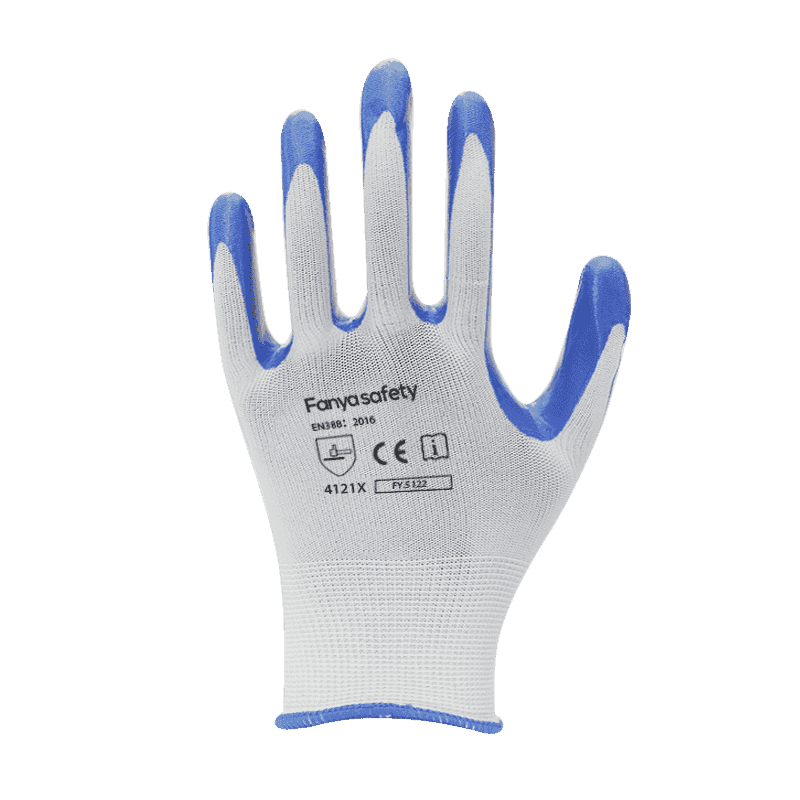
Chemical and thermal degradation get most of the attention, but physical factors are responsible for a large proportion of glove failures in practice. In many industrial audits, punctures, tears from sharp edges, and improper donning account for more glove failures than chemical permeation.
Standard examination nitrile gloves (4–6 mil) have puncture resistance superior to latex of the same thickness, but they are not cut-resistant. A sharp edge, wire, or needle can puncture nitrile instantly. Thicker nitrile gloves at 8–15 mil significantly improve puncture resistance, but no standard nitrile examination glove passes cut-resistance standards — those require separate cut-resistant liner materials. In environments with sharp metal, glass shards, or needles, nitrile alone is insufficient and must be combined with cut-resistant layers.
Nitrile is less elastic than latex. A nitrile glove's elongation at break is typically 400–550%, compared to 700–800% for latex. This means overstretching — pulling a glove over large hands in the wrong size, or pulling it over a watch or ring — creates microtears that may not be visible but compromise the barrier significantly. Workers wearing gloves one size too small are at elevated risk of this type of failure.
Wearing nitrile gloves for multiple hours without changing them introduces an often-overlooked degradation factor: sweat. Perspiration is mildly acidic (pH 4.5–7.5) and contains salts and organic compounds. Over a long shift, internal moisture softens the glove material slightly and can cause the inner surface to become tacky and adhere to the skin, making removal more difficult and increasing the chance of tearing the glove. The recommended maximum continuous wear time for standard nitrile examination gloves in most occupational health guidelines is 2 hours, after which the gloves should be replaced regardless of apparent external condition.
A box of nitrile gloves that has been stored incorrectly can be just as compromised as one that has been soaked in solvent. Pre-use degradation from poor storage is a common but rarely discussed problem, particularly in facilities that stockpile gloves.
The risks to nitrile gloves vary widely by industry. The following examples illustrate how real-world environments create specific glove destruction scenarios that generic product listings often fail to address.
Mechanics encounter brake cleaner (often containing acetone or heptane), parts washers (often using naphtha or mineral spirits), battery acid (sulfuric acid), and transmission fluids. For brief contact, nitrile handles most of these. But brake cleaner is often sprayed liberally, and the aromatic components in some formulations break through thin nitrile almost instantly. Many professional mechanics now use 8–10 mil nitrile specifically because the additional thickness extends usable protection time meaningfully.
Pharmaceutical synthesis labs routinely use THF, dichloromethane, ethyl acetate, and methanol — all of which compromise nitrile to varying degrees. In pharmaceutical manufacturing environments under regulatory oversight, glove change intervals are strictly defined based on permeation data. It is not uncommon for glove change protocols in API (active pharmaceutical ingredient) manufacturing to require replacement every 20–30 minutes when working with certain organic solvents, even with thicker nitrile gloves.
In food processing, nitrile gloves face heat from cooked products, acidic marinades, cleaning chemicals (sanitizers and caustic foams), and repeated thermal cycling. Chlorinated sanitizers used in poultry and meat processing are oxidizing agents that progressively weaken nitrile. Food processing facilities that sanitize with sodium hypochlorite at 200 ppm or higher should treat nitrile gloves as single-use items and not reuse them between sanitation cycles.
Healthcare workers using nitrile gloves face glutaraldehyde (a high-level disinfectant), formaldehyde solutions, certain chemotherapy drugs, and isopropyl alcohol-based sanitizers. Glutaraldehyde causes nitrile swelling and has relatively short breakthrough times compared to IPA. Nitrile gloves used for chemotherapy compounding must meet ASTM D6978 (now superseded by USP 800 guidelines), which has specific permeation requirements. Not every box of nitrile gloves sold as "exam gloves" meets this standard.
In many cases, glove degradation is not visually obvious until the glove has already failed. Knowing the warning signs — and performing simple checks — can prevent chemical exposures before they happen.
A quick air inflation test can also help: pinch the cuff, trap air inside the glove, and roll it gently toward the fingertips. Any hissing or visible deflation indicates a hole or micro-tear. This is a common field check used in laboratory and medical environments.
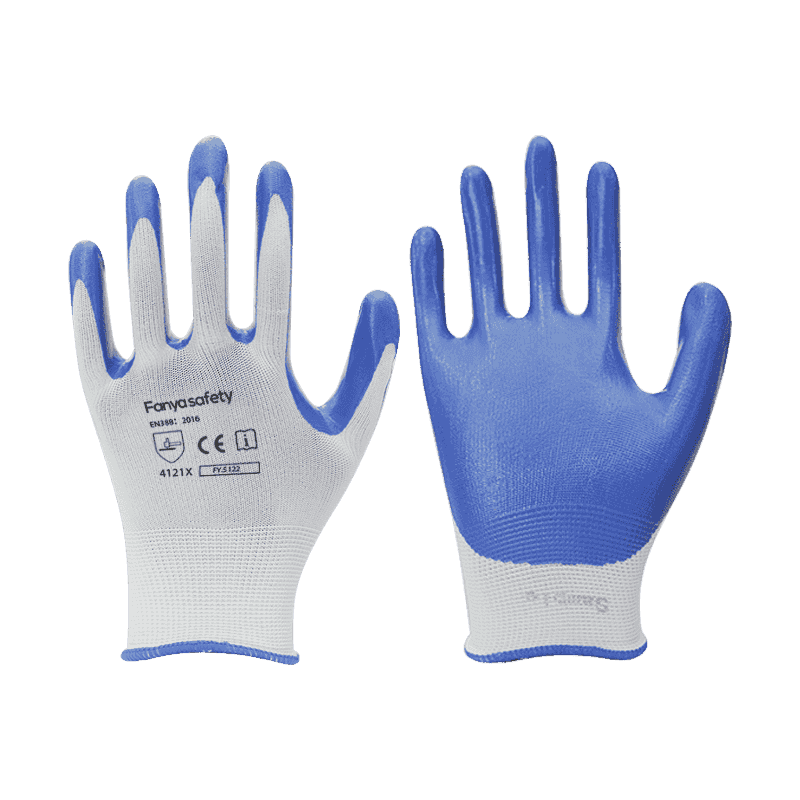
Nitrile gloves are versatile, but they are not universally the best choice. Recognizing when to switch materials is just as important as knowing nitrile's limits.
| Hazard / Application | Nitrile Performance | Better Alternative |
|---|---|---|
| Ketone solvents (acetone, MEK) | Poor — rapid breakthrough | Butyl rubber or laminated barrier gloves |
| Aromatic hydrocarbons (toluene, xylene) | Poor — very rapid breakthrough | Laminated (Silver Shield / 4H) gloves |
| Hydrofluoric acid | Inadequate — life safety risk | Neoprene or butyl rubber with specific HF rating |
| Extreme heat (above 150°C) | Unacceptable | Heat-resistant silicone or aluminized gloves |
| Cut and puncture hazards | Poor to moderate | Cut-resistant liner + nitrile outer, or steel mesh |
| Chemotherapy drug compounding | Acceptable only if ASTM D6978-rated | Double-glove with ASTM D6978-rated nitrile |
| Strong oxidizers (concentrated H₂O₂, ozone) | Poor for high concentrations | Neoprene or EPDM gloves |
While knowing what destroys nitrile gloves is essential, equally important is understanding how to get maximum protection out of them in situations where they are the right choice.
Nitrile gloves are among the most widely used personal protective equipment in the world, and for good reason — they combine broad chemical resistance, reasonable durability, and latex-free construction in an affordable package. But they are not an all-purpose solution. The single most common mistake users make is assuming that because nitrile resists many chemicals, it resists all of them. Understanding exactly what destroys nitrile — and at what concentrations and exposure durations — is the foundation of genuinely effective hand protection, not just the appearance of it.
Your email address will not be published. Required fields are marked *
You can contact to me using this form.