
 中文简体


Product Consultation
Your email address will not be published. Required fields are marked *
Content
A vinyl glove splits while someone is portioning raw chicken. A powdered latex glove leaves a fine white film on a stainless tray. A 2-mil polyethylene glove fogs from the inside and comes off after four minutes. None of these problems appears on the box label, and all of them appear in the middle of a shift.
Here is the short answer before the detail: powder-free nitrile in the 4-mil range is the right default disposable glove for most food handling, because it resists animal fats and vegetable oils, survives a normal task cycle, contains no natural rubber latex protein, and can be ordered in a color that stands out against the product being handled. Vinyl covers short, dry, low-risk contact. Polyethylene covers one-shot dry jobs. Latex still wins on wet grip, but it brings a protein sensitivity question that many food plants would rather not manage on a busy floor.
The rest of this guide covers how the four disposable materials actually compare, how to verify thickness and size before committing to a pallet, what powder and color choices do to a packing line, how storage habits quietly ruin gloves before they are worn, and where disposable gloves stop making economic sense at all.
If you order one specification and need it to cover the widest range of food tasks, choose powder-free nitrile at 4 mil with a textured fingertip and a beaded cuff. Nitrile handles animal fats, vegetable oils and the constant wet-dry cycling of a kitchen line better than any other disposable material at a similar price. Its puncture resistance is roughly two to three times that of vinyl at a comparable thickness, which matters when you are pulling bones out of a tray or opening vacuum-packed fish.
Three situations justify a different material:
Everything else, thickness, length, size, powder and color, is a specification decision you can settle with a sample box, a scale and one week of counting.
The table below reflects how the four materials usually behave in real food work rather than how they look on a marketing sheet. Thickness ranges cover common commercial grades, not laboratory extremes.
| Material | Typical thickness | Wet and oily grip | Fat and oil resistance | Puncture resistance | Best fit in food work |
|---|---|---|---|---|---|
| Nitrile (NBR) | 3 to 6 mil (0.08 to 0.15 mm) | Very good | High, swells slowly | High | Raw meat and poultry, fish, greasy prep, general kitchen lines |
| Natural rubber latex | 4 to 8 mil (0.10 to 0.20 mm) | Excellent | Moderate, softens after long oil contact | High | Shellfish, seafood, wet washing, tasks needing stretch |
| Vinyl (PVC) | 3 to 5 mil (0.08 to 0.13 mm) | Poor | Low, plasticizer migrates on fat contact | Low | Dry, short tasks, bread, produce, front of house |
| Polyethylene (PE) | 0.4 to 1.0 mil (0.01 to 0.025 mm) | Poor | Very low | Very low | One-shot dry dispensing and produce bagging |
Two things the table cannot show. First, vinyl loses flexibility quickly once it touches hot fat, so a glove that feels fine at the start of a barbecue prep session can feel like a plastic bag twenty minutes later. Second, latex grip advantage disappears when the surface is oily rather than simply wet, because oil attacks the film itself.
Thickness is the most abused number in the disposable glove trade, partly because mil and millimeter are used interchangeably in conversation and partly because film thickness varies across the palm, fingers and cuff of the same glove. One mil equals 0.0254 mm, so the common grades translate as follows:
Do not trust the mil claim alone. Weigh the gloves. A medium 4-mil nitrile glove normally lands between 5.5 g and 7 g; if a sample weighs 4.2 g, the film is thinner than the label suggests. Batch tolerance of plus or minus 0.01 mm is normal, which is why a supplier who can hold a consistent gram weight across shipments is worth more than one who quotes the lowest price per box.
Fit follows palm width more than finger length. Typical published sizing charts put small at 85 mm flat palm width, medium at 95 mm, large at 105 mm and extra large at 115 mm. Cuff length matters just as much: a standard 240 mm glove is fine for surface work, while a 290 to 300 mm extended cuff keeps water out when hands go deep into a sink or a brine tank. A glove that is one size too large will roll at the cuff and fill with liquid within minutes.
Three specification choices change how a glove behaves on a real line far more than most buyers expect.
Powdered gloves use a food-grade starch lubricant to make donning easier. The lubricant ends up somewhere, and that somewhere is usually a tray, a conveyor or a mixing bowl. Powder-free gloves solve the residue problem, and modern chlorinated or polymer-lined interiors make them just as easy to pull on. If your team complains about powder-free gloves being sticky, the issue is usually damp hands rather than the glove.
Color is a control measure, not a fashion choice. Blue dominates food service because it contrasts with bread, cheese, poultry, most vegetables and stainless steel. Purple, green and black serve the same purpose where blue clashes with the product itself, such as blue cheese or blue-banded packaging. Clear gloves disappear against pale foods, which makes a torn fingertip almost impossible to spot.
Processors running inline metal detection often stock nitrile gloves loaded with detectable particles, so a fragment that enters the flow is rejected by the detector rather than reaching a customer. These gloves typically cost several times a standard nitrile glove, so they are reserved for lines where detection equipment already exists rather than applied across an entire plant.
Disposable gloves are cheap per unit and expensive per shift. Walk a filleting line and count the changes: a worker breaking down fish or poultry can burn through 15 to 25 gloves in a single shift, because the film punctures on fins, bones and shell edges. Every change also costs time, roughly 10 to 20 seconds once hands have been dried, and a wet hand is the most common reason a glove tears during donning in the first place.
Freezer work is harder still. Nitrile stiffens as temperature drops, so a 4-mil glove worn in a room held at minus 18 degrees Celsius loses flexibility and cracks at the knuckle. Add a wire rack, a scrubbing pad or a shellfish shell and the film is simply the wrong tool for the job.
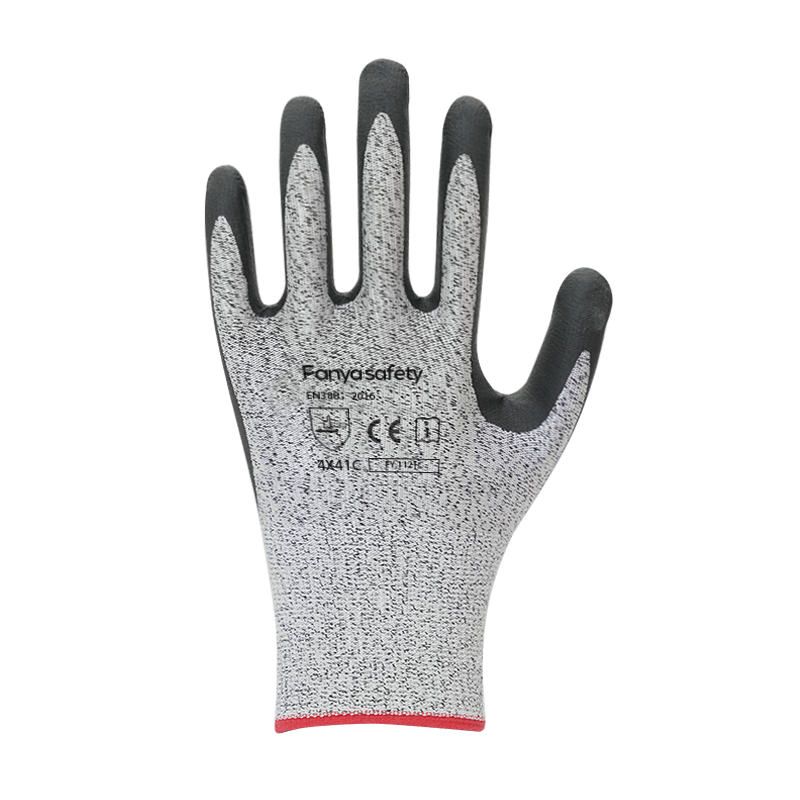
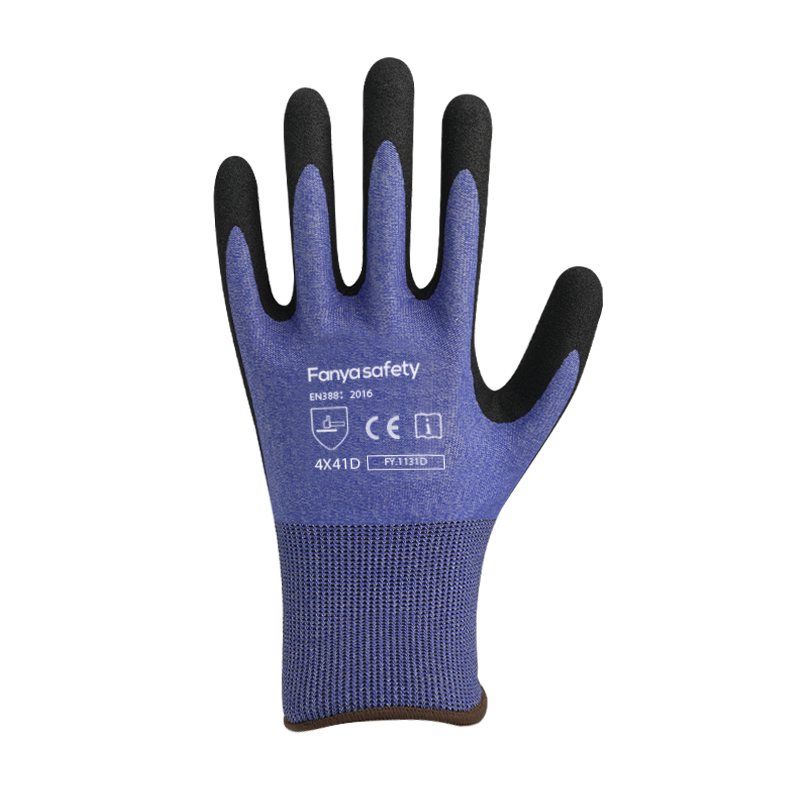
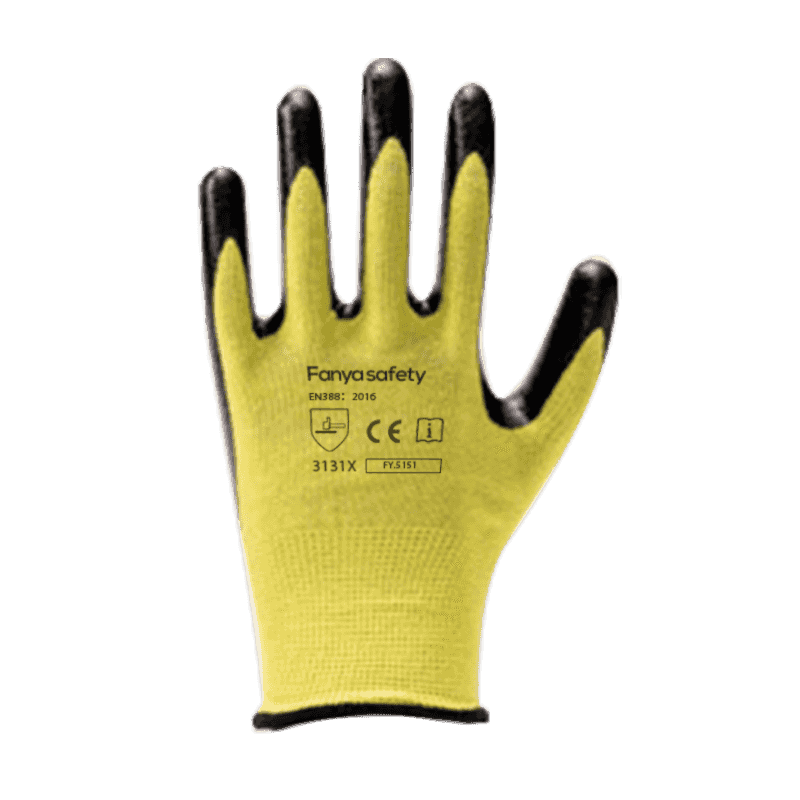
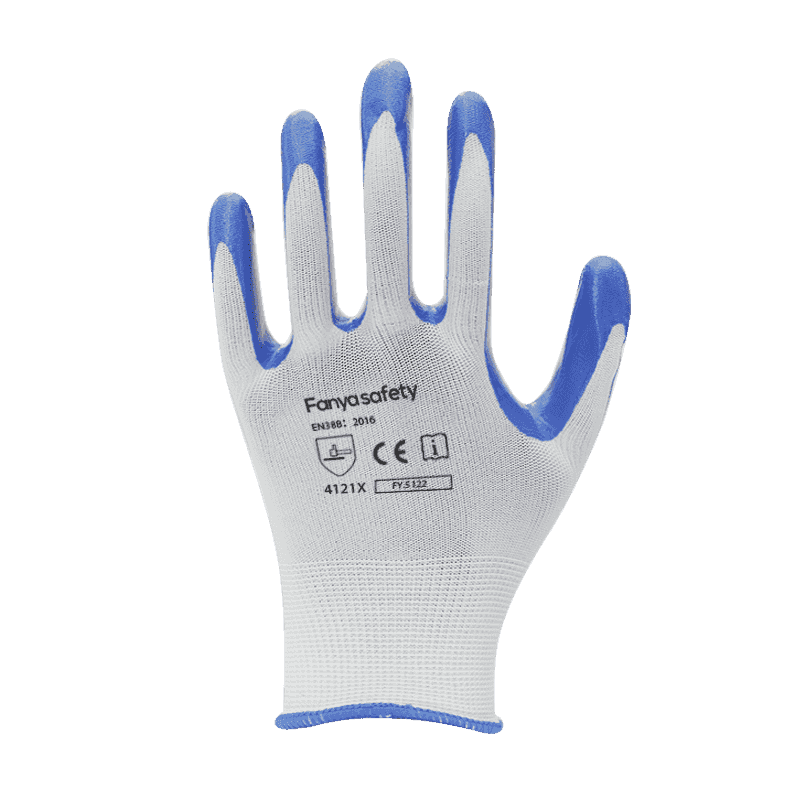
This is where knitted gloves with a nitrile coating take over. A 13g nylon liner with a nitrile palm coating keeps a barrier between hand and product while surviving a full shift of wet and greasy handling, and it can be laundered and returned to service. Plants that run both systems normally keep a thin disposable underneath on ready-to-eat lines for cross-contact control and use the coated glove on the raw side, where puncture and oil resistance matter more than single-use convenience. Buyers comparing that option can read a short overview of nitrile-coated work gloves to see how liner gauge and coating finish change grip and wear life.
 13G nylon liner with nitrile coating2. General maintenanceView Product →
The decision table below splits the most common food tasks between single-use film and reusable coated gloves.
| Task | Usual choice | Practical reason |
|---|---|---|
| Sandwich and salad assembly | Disposable nitrile or vinyl | Short cycles, low puncture risk, frequent changes for cross-contact control |
| Breaking down poultry and primal cuts | Coated reusable | Bone edges puncture 3 to 4 mil film within minutes |
| Fish filleting and shellfish opening | Coated reusable over a disposable where required | Constant wet grip demand plus shell and fin abrasion |
| Dry bakery and dry ingredient packing | Disposable vinyl or lightweight nitrile | No oils or sharp edges, so cheap film is sufficient |
| Cleaning slicers, trays and scrub pads | Coated reusable | Abrasion destroys disposable film and creates fragments |
Oily, wet and abrasive work is where coating texture matters more than film thickness. A sandy nitrile finish, also described as a foam or sandpaper finish, creates a rough surface that channels oil and water away from the contact point instead of letting it float on a smooth palm. On a line where workers handle greasy trays, oiled machine parts or wet packaging film, that difference shows up as fewer dropped items in the first hour.
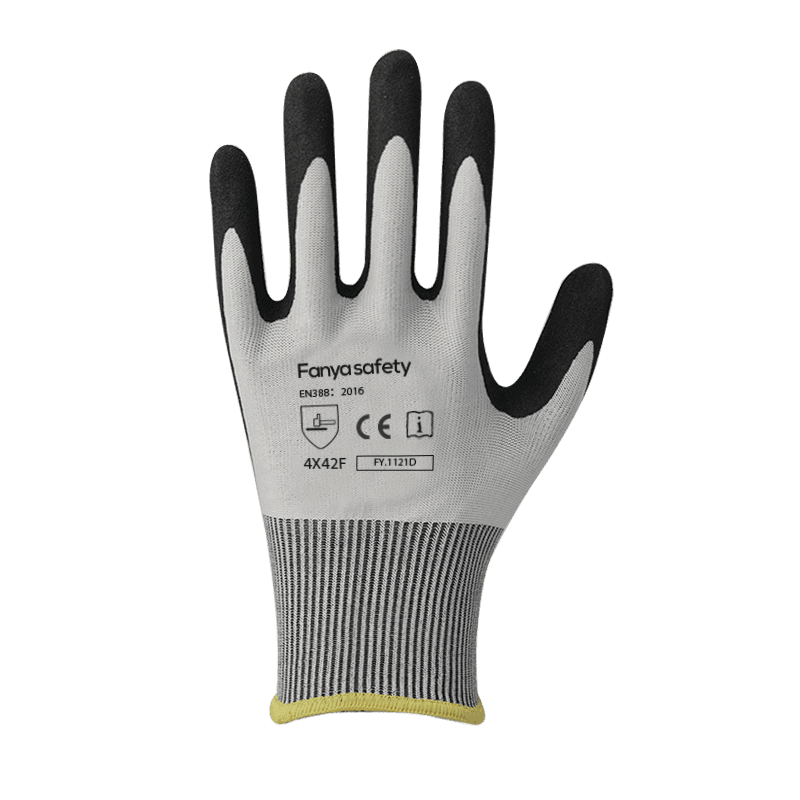
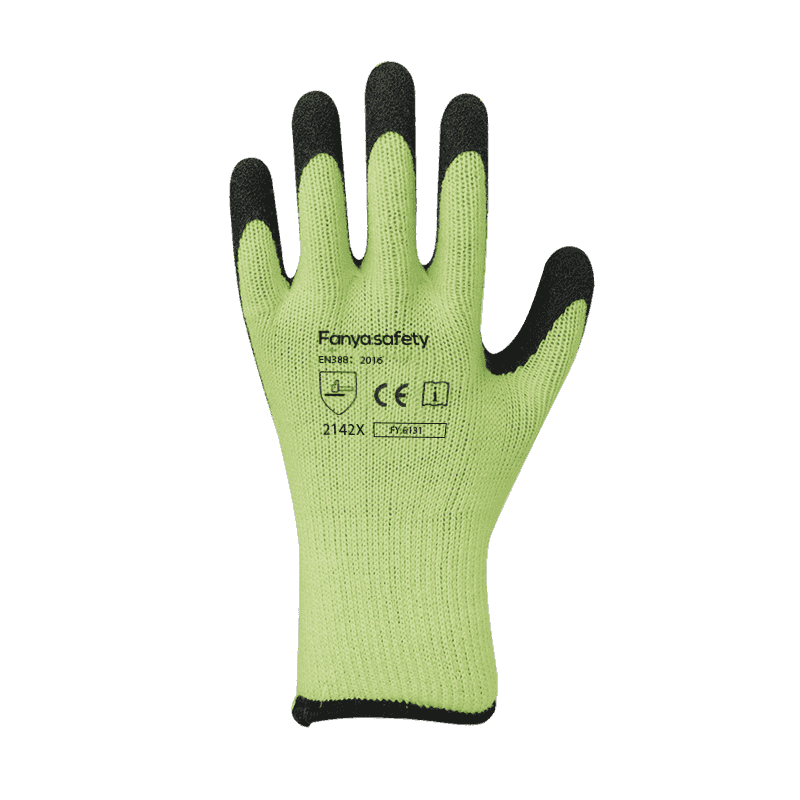
A 13g polyester liner with a sandy nitrile coating is a common starting point: light enough for all-day wear, tough enough for repeated handling of crates and pans, and washable at moderate temperatures for a limited number of cycles, typically somewhere between 15 and 30 depending on wash chemistry and drying method.
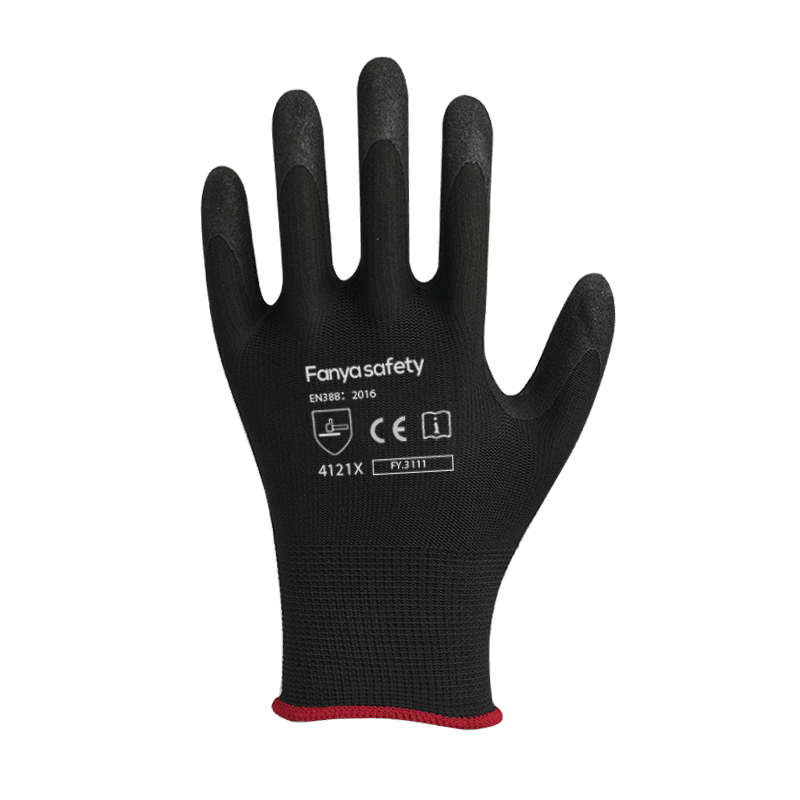 13G polyester liner with sandy nitrile coating2. General maintenanceView Product →
Where the surface is wet but not oily, elasticity does more work than surface roughness. A natural rubber latex-coated glove range still delivers the tackiest wet grip available in a coated knit glove, which is why it remains common in shellfish, washing and vegetable prep areas. Oil exposure is the limiting factor: prolonged contact with hot fat degrades the coating faster than water ever will.
Not every food job is wet. Dry packing halls, tray sealing stations, bakery lines and portioning benches for dry ingredients have a different problem: hands sweat inside a film glove, workers change more often than the task requires, and residue from the glove interior ends up on product contact surfaces.
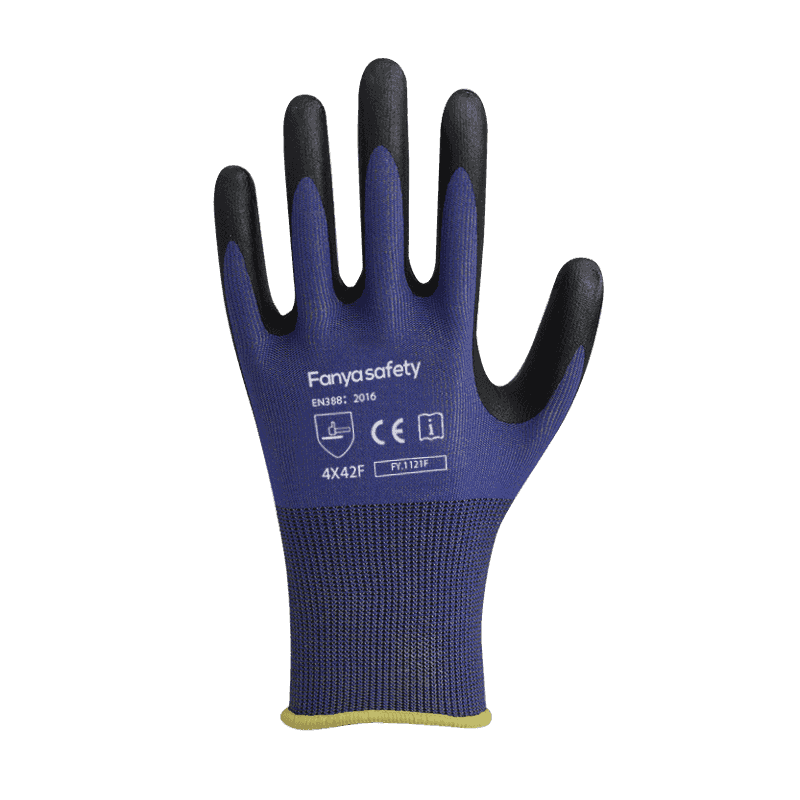
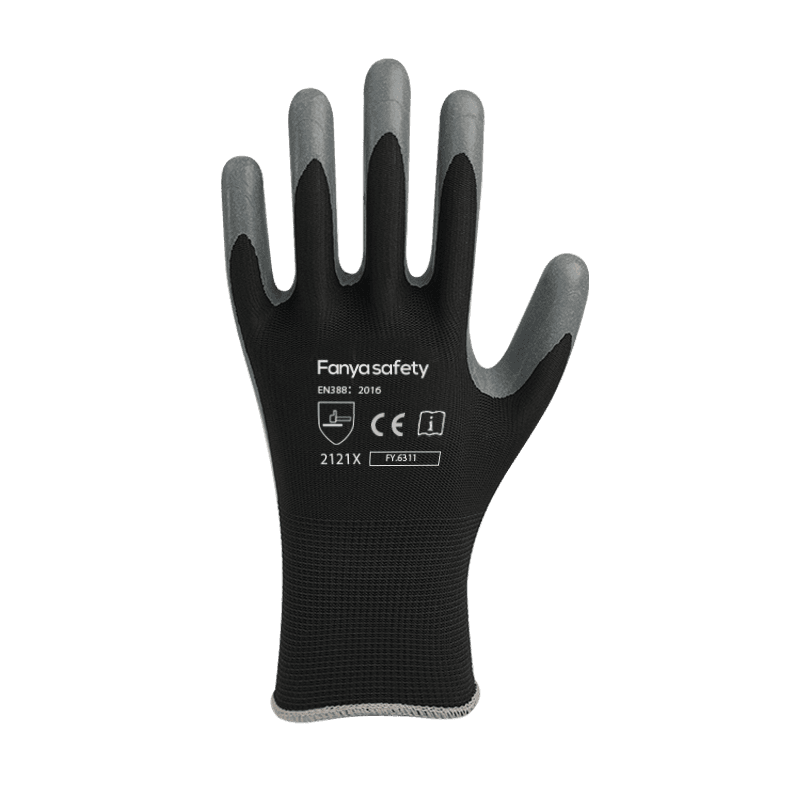
A water-based polyurethane coating is a good answer in these zones. The coating is breathable enough that the back of the hand stays comfortable across a full shift, it leaves no powder or plasticizer residue, and the knit liner provides cut and abrasion protection that a disposable glove never delivers. For dry ingredient weighing, packaging sealing and light inspection work, this type of glove often replaces a dozen changes of disposable film per person per shift.
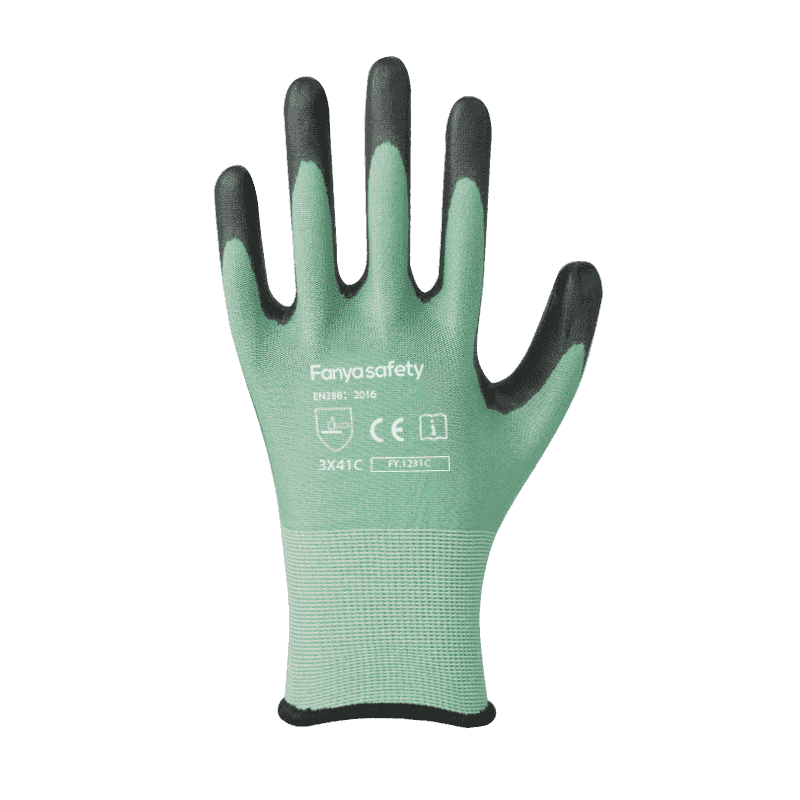 WATER-BASED PU Gloves Manufacturersinformation to be updatedView Product →
The trade-off is simple: coated gloves need laundering, tracking and replacement on a schedule, so they suit operations with a laundry contract or an in-house wash cycle. Without that discipline, disposable film stays cheaper.
Purchase price per box hides the number that actually matters. Run the arithmetic on a mid-size plant with 60 handlers on the floor:
That is why the cheapest box is rarely the cheapest program. A slightly thicker glove that survives one more task cycle often removes more cost than a price negotiation on thin film ever will. Count gloves per shift for a week before and after a specification change and the answer becomes visible without any spreadsheet debate.
Gloves often arrive in perfect condition and fail before they are worn. Nitrile, latex and vinyl all degrade faster in sunlight, heat and ozone, so a carton stored beside a compressor or an electric motor ages faster than the same carton in a closed cabinet. Keep stock below 30 degrees Celsius, away from direct sunlight, and out of rooms where humidity sits above 65 percent for long periods. Unopened nitrile cartons typically hold their properties for three to five years; latex is closer to two to three years, and vinyl about three.
Dispensing is the second quiet failure point. Wall-mounted dispensers that release one glove at a time reduce both waste and contamination from a shared box. Stations mixing three materials in one bin are a reliable way to see the wrong glove used on the wrong task. One station, one material, one size range is a rule that costs nothing to enforce.
Powder-free nitrile at 4 mil is the best all-round choice for most food handling. It resists fats and oils, resists punctures better than vinyl, contains no natural rubber latex protein, and is available in high-visibility colors. Vinyl is acceptable for short dry tasks, and polyethylene only for one-shot dry jobs.
For oily and fatty foods, yes. Nitrile resists oil far longer, while latex softens after extended fat contact. Latex still provides better tacky grip on wet, non-oily surfaces such as shellfish, but its protein sensitivity risk pushes many plants toward a single-material nitrile policy.
Most should not. The starch lubricant migrates onto trays, conveyors and product contact surfaces, adding a residue that has to be managed. Powder-free gloves with a chlorinated or polymer-lined interior solve the donning problem without leaving a film behind, and they behave the same after a long shift.
Work from the task, not the clock. Most plants set internal rules around two to four hours for continuous low-risk work and change immediately after any tear, visible soiling or move between raw and ready-to-eat zones. Counting actual changes per shift is the fastest way to size a glove budget accurately.
Treat 4 mil (0.102 mm) as the practical minimum for raw meat, poultry and fish. Two to three mil film suits light food service and dry tasks. Five to six mil is worth considering for wet fish work and heavy prep where the loss of fingertip sensitivity is acceptable.
No. Film gloves are made for a single task cycle, and washing them distorts the film, weakens the barrier and creates a contamination risk from handling them repeatedly. If reuse is the goal, switch to a knitted glove with a nitrile or PU coating that is designed for laundering and multiple cycles.
Blue and other dark colors are not more protective, but they are far easier to spot if a fragment ends up in food, and they contrast with most ingredients. Clear gloves disappear against pale foods, which makes a torn fingertip difficult to detect during a visual check.
Disposable gloves for food are a small line item with an outsized effect on throughput, waste and product risk. Powder-free nitrile at 4 mil covers most handling tasks, vinyl handles the short dry jobs, and polyethylene stays in its narrow lane of one-shot dry dispensing. Weight the gloves you receive, check the cuff length against real working conditions, and measure the cost per shift rather than the cost per box.
For the tasks where film keeps failing, on bones, shells, scrub pads and freezer racks, a knitted glove with a nitrile, sandy nitrile or water-based PU coating will outlast dozens of disposables and can be laundered back into service. Choosing between the two systems is not a matter of preference; it is a matter of matching the material to what the shift actually does to a pair of hands.
Your email address will not be published. Required fields are marked *
You can contact to me using this form.